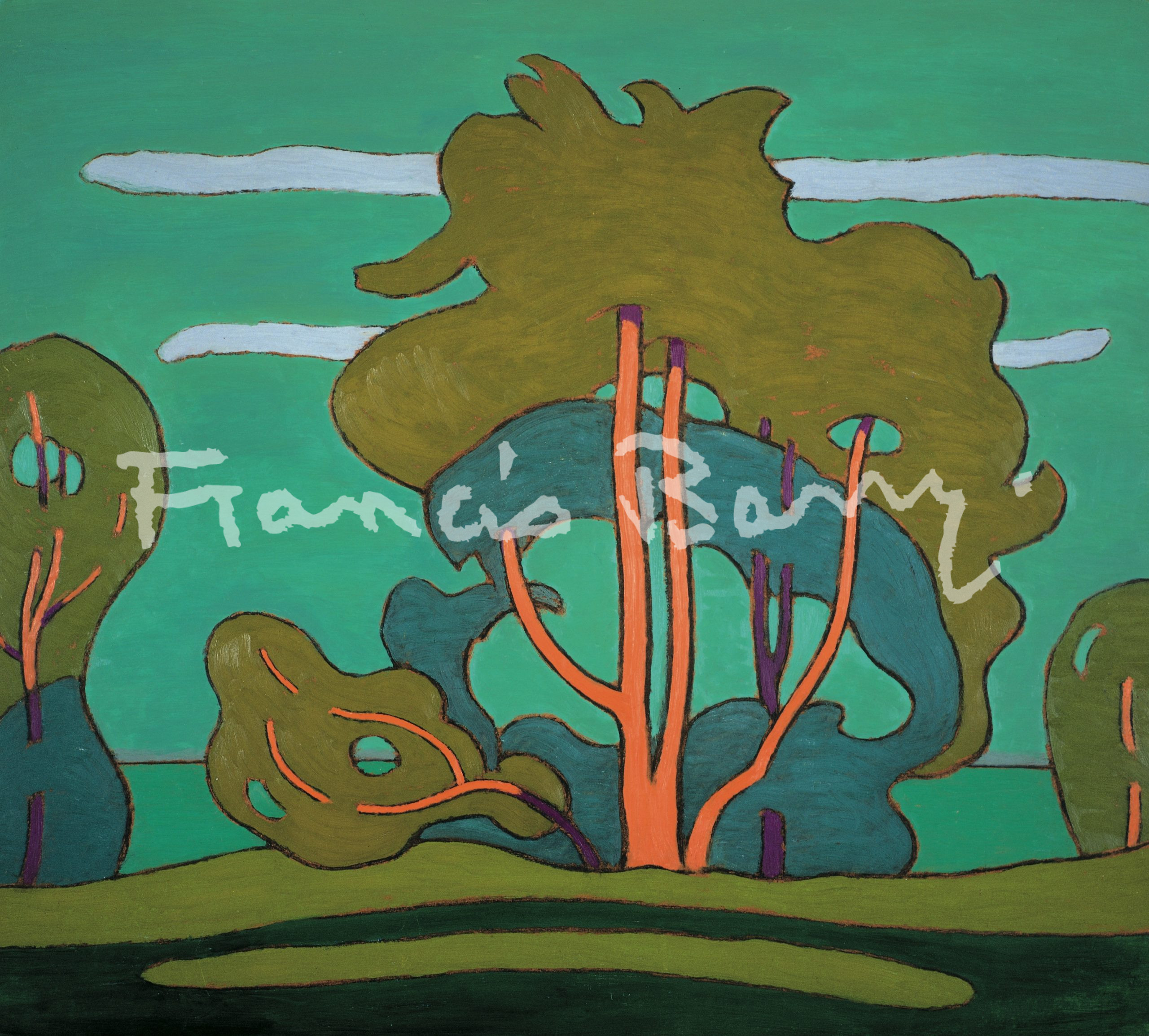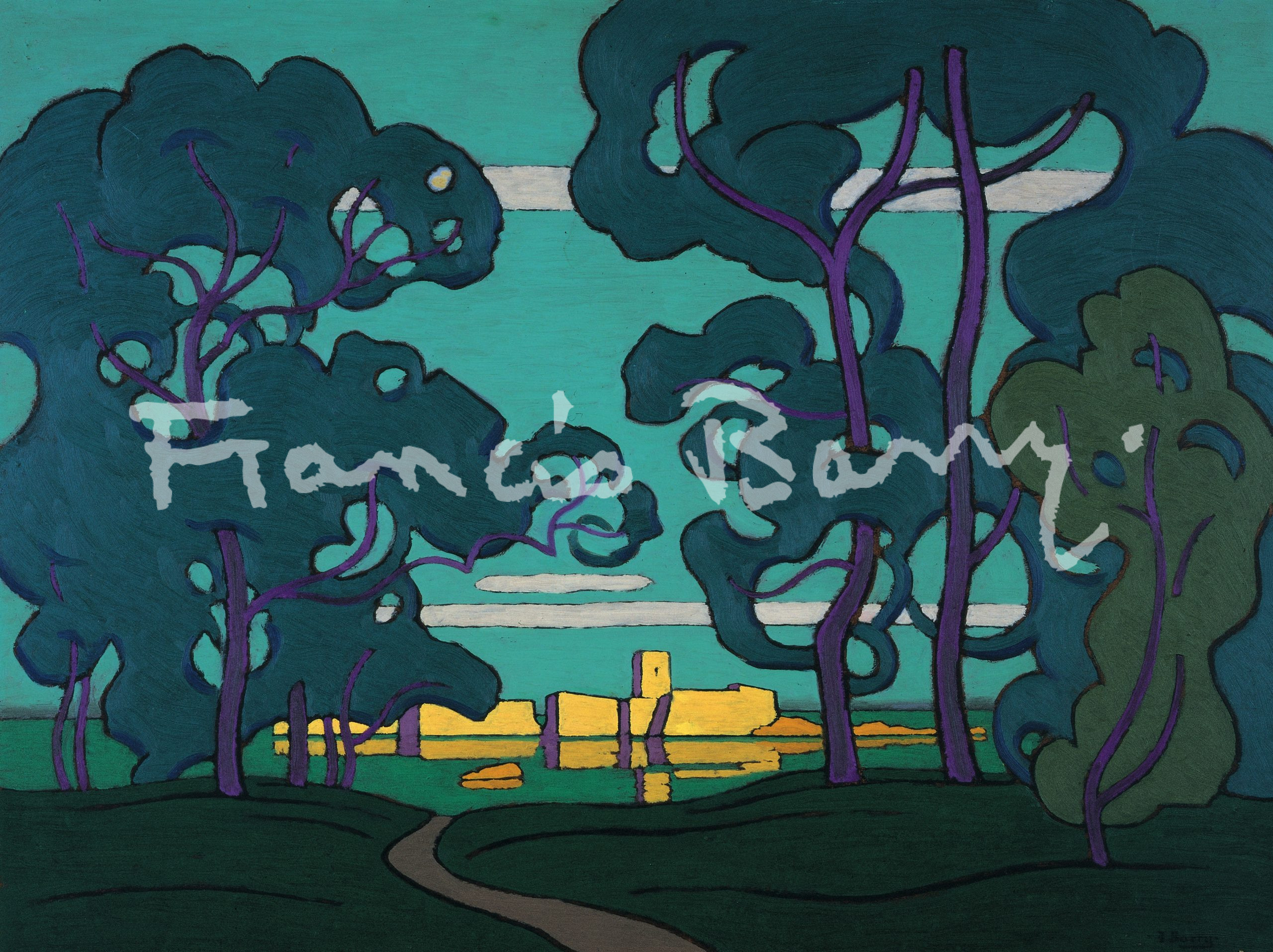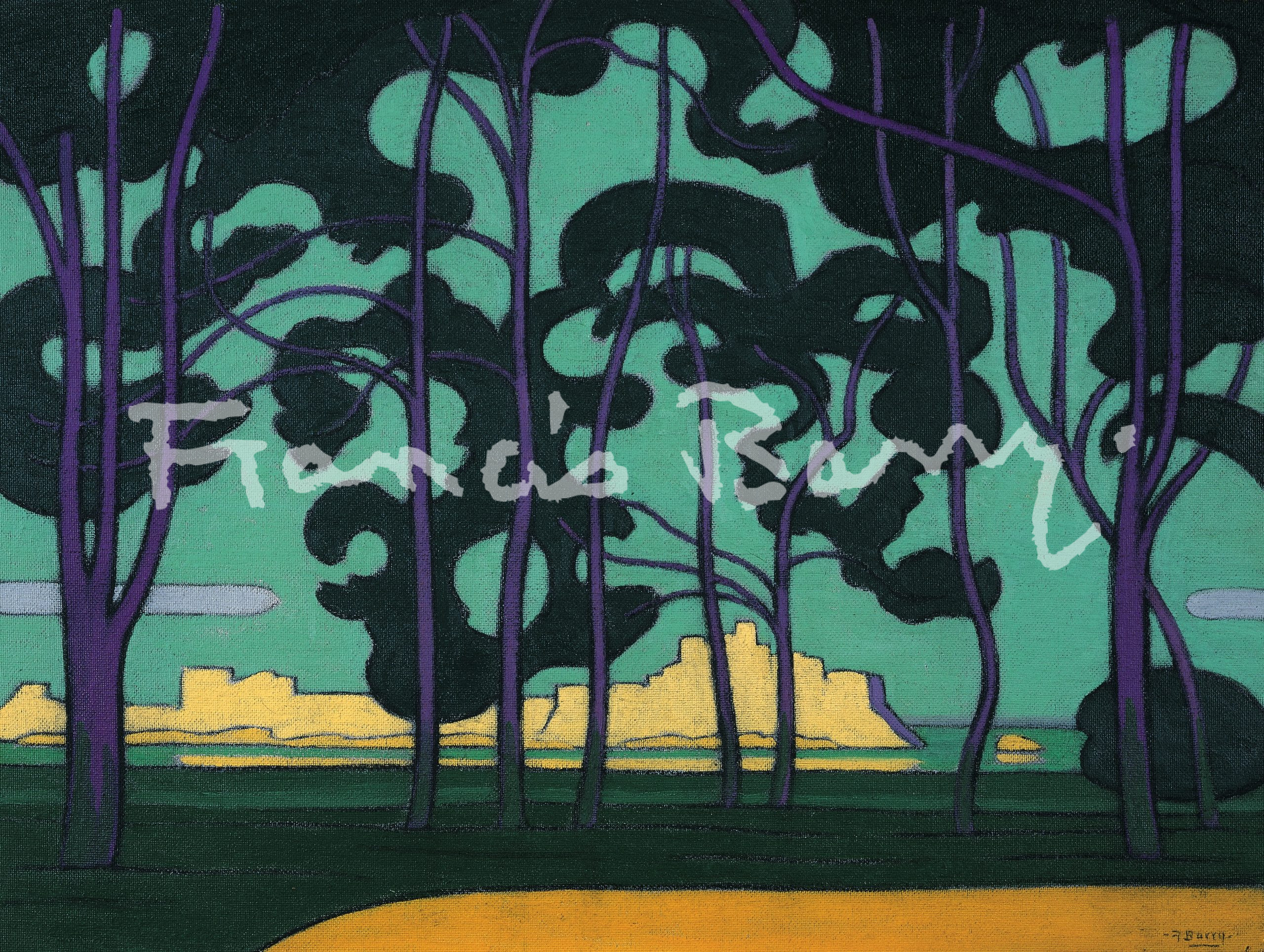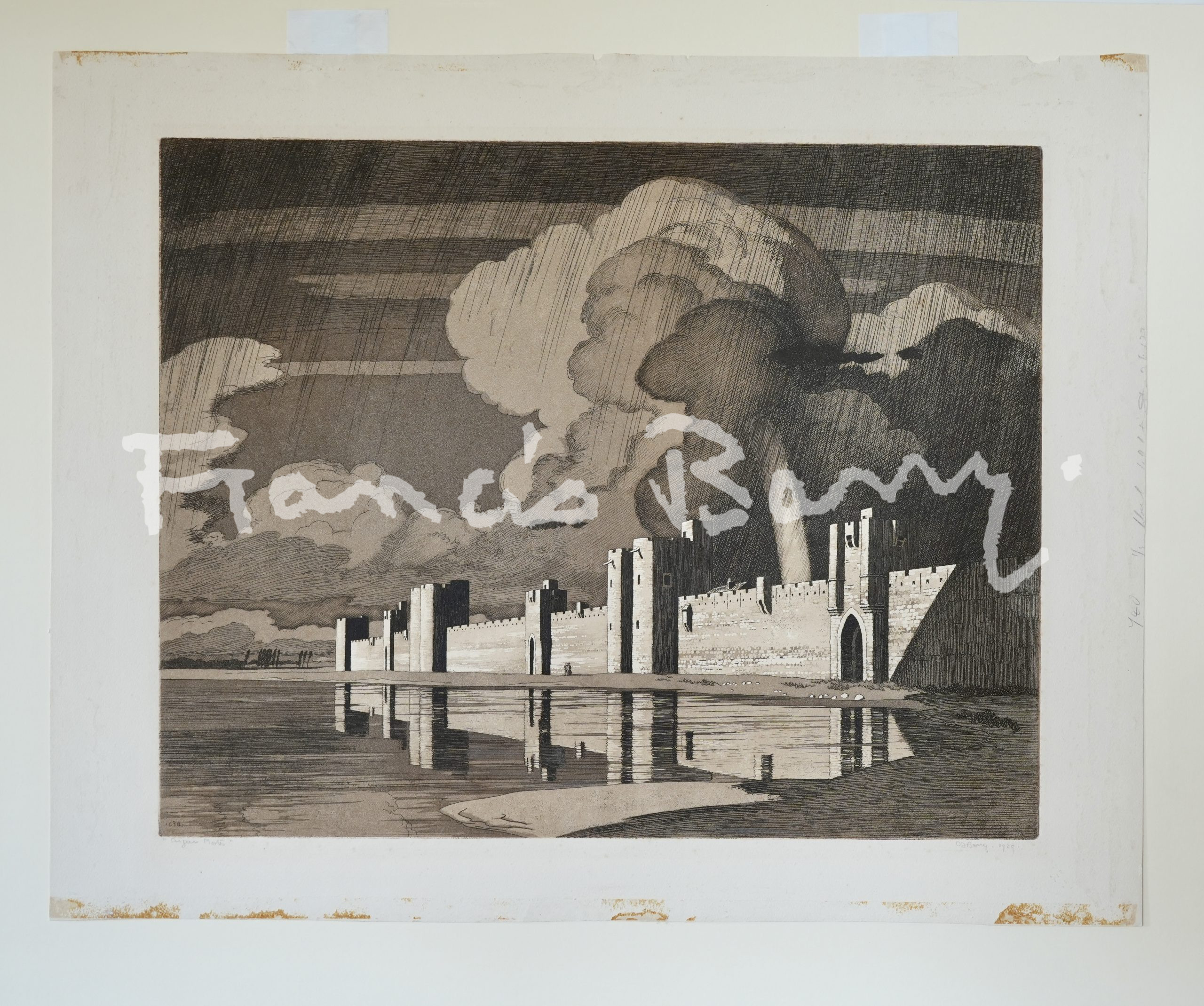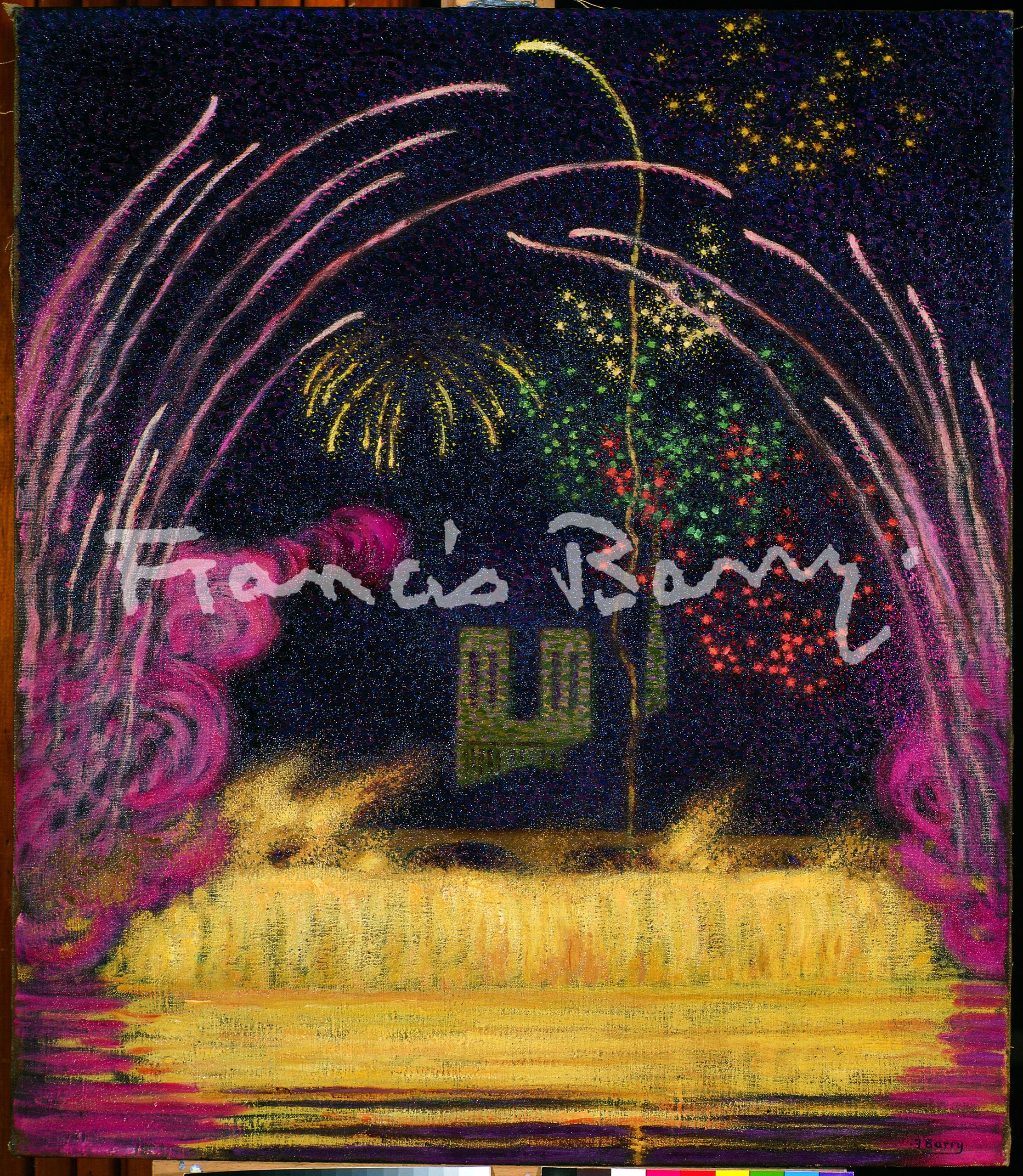

As a part of his continual development Barry ventured into new territory—that of Modernism. In his manuscript, Painting, written in the latter part of his life, Barry expressed that a painter should simplify their work; he pushed constantly toward elemental simplicity. He moved from romantic landscapes and captivating Pointillistic works to a highly original synthesis of European Fauvism and Vorticism—styles he fully embraced and mastered. This shift was characterised by severe, contrasting compositions and a dynamism of form.
“Colour is to painting what love is in a mans life, for with love all is well and the world is a fine place, but without it life’s just hell!”
– Barry from ‘Painting’
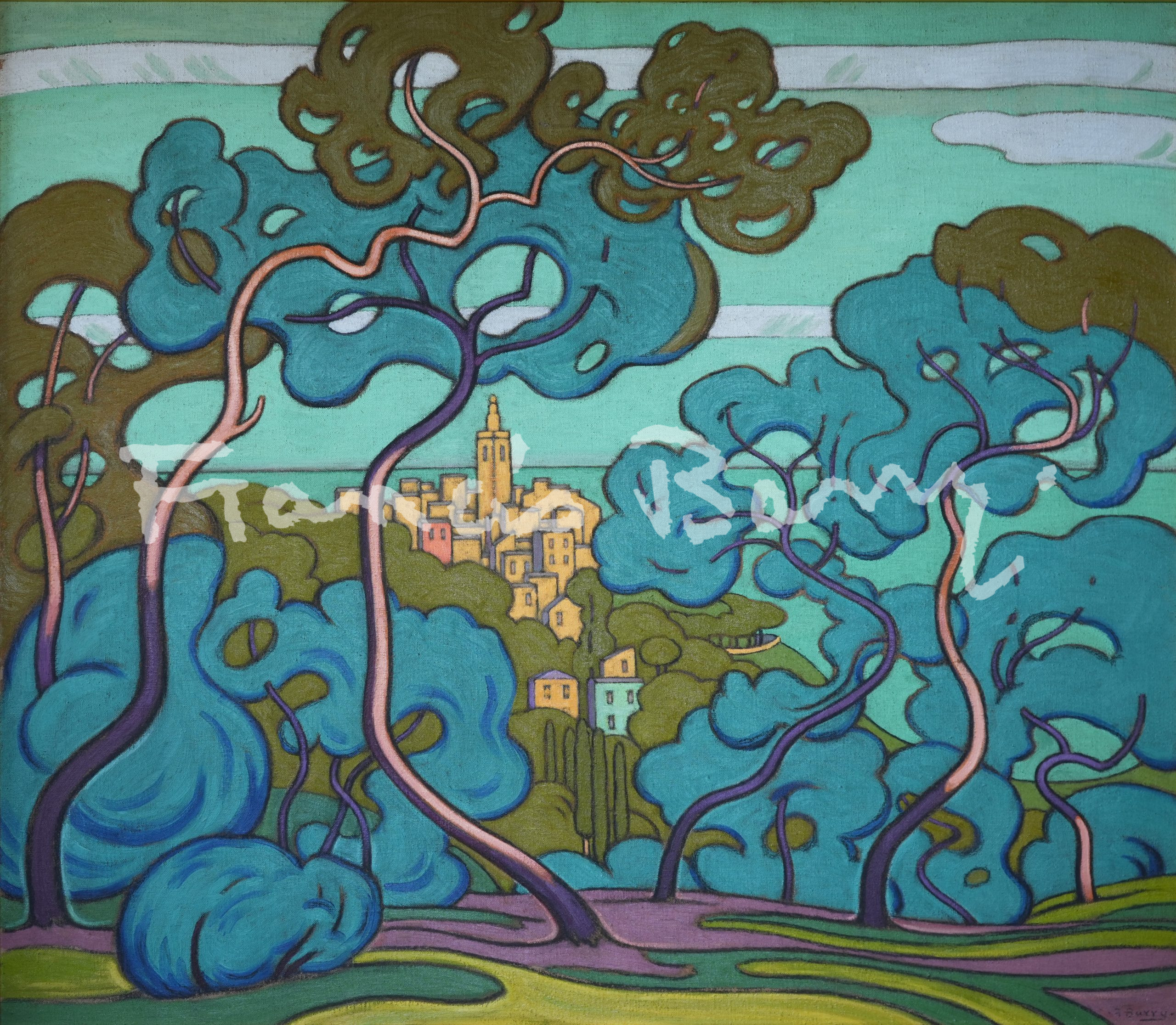
This development was supported by his specific view of “real drawing” not mechanical realism. He viewed this as a challenge in expression, noting in Painting: “Real drawing is drawing lines to express, not a representative superficial likeness, but the character of the person or object you are drawing”. To Barry, simple, deliberate lines possessed their own emotional vocabulary, capable of expressing “peace, happiness, anger, calm, or storm” without the need for intricate detail.
Central to Barry’s philosophy was the belief that any detail failing to serve the overall composition was harmful, regardless of its individual beauty: “Real finish is not adding details but taking them out”. In his Porthmeor Beach studio, he would labor for hours over charcoal designs to resolve problems in perspective, ensuring the foundations of form drove toward a sophisticated simplicity. Even in his most stylised Modernist works, Barry remained a master of composition, frequently employing the “oval rule” to prevent subjects from feeling isolated.
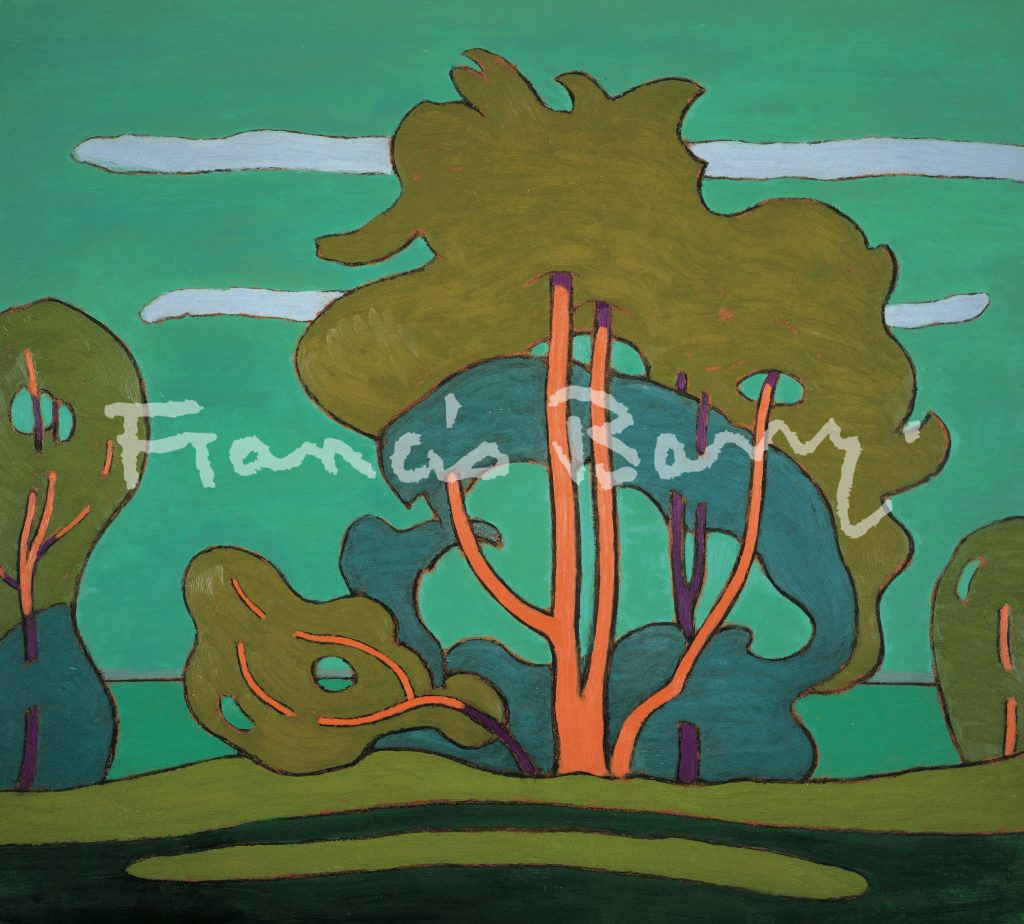
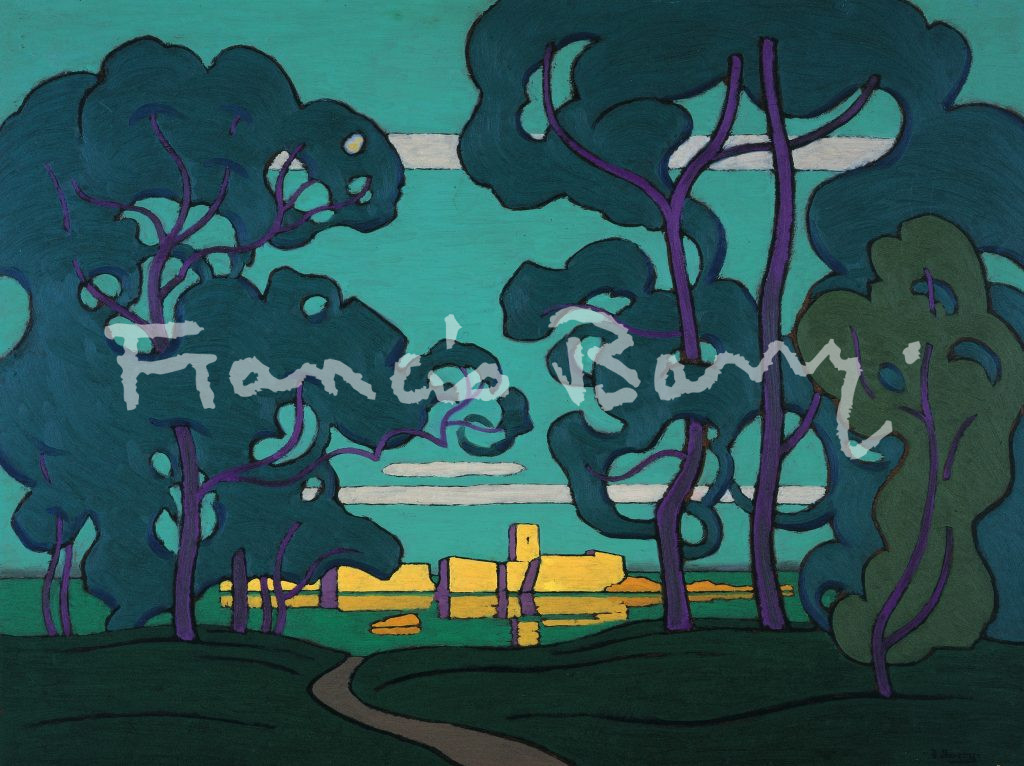
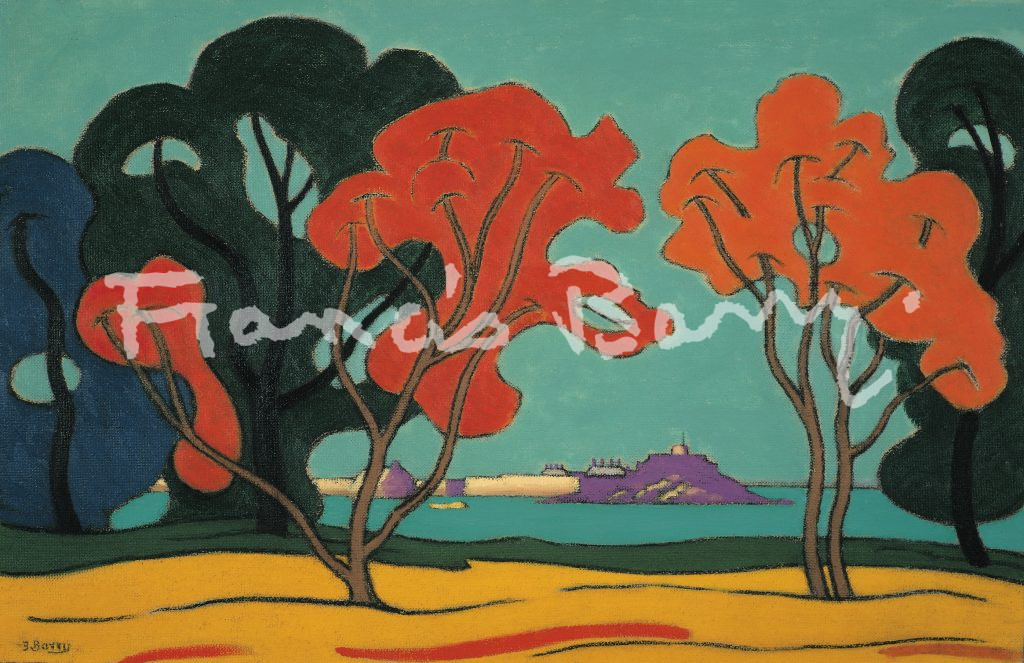
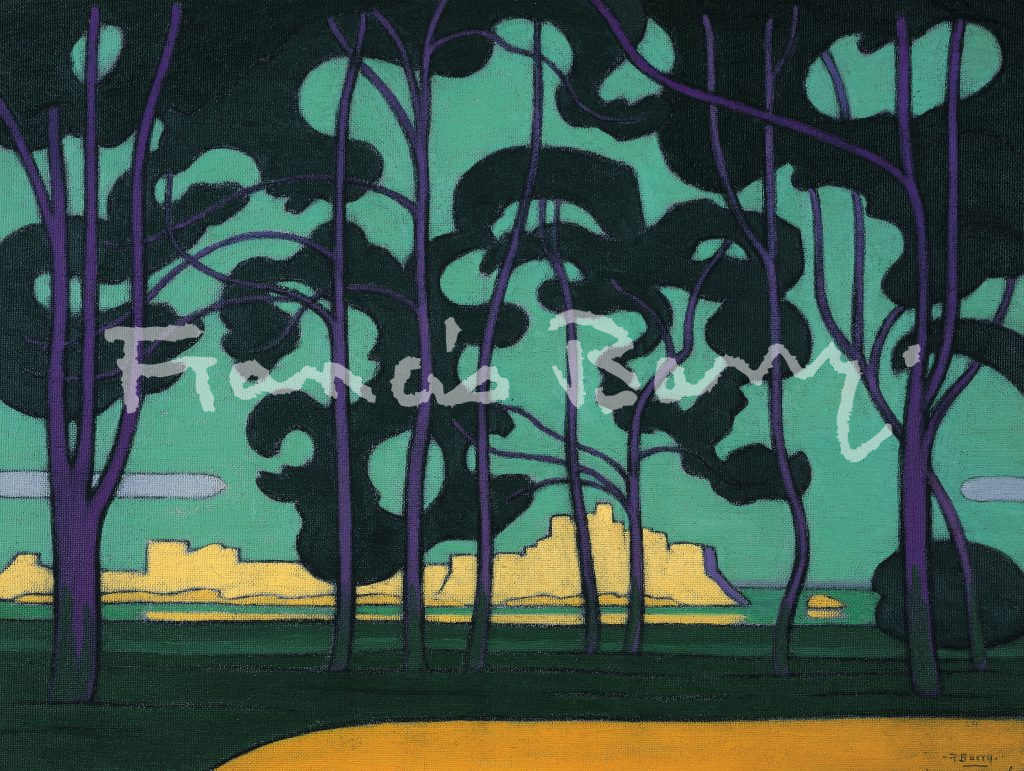
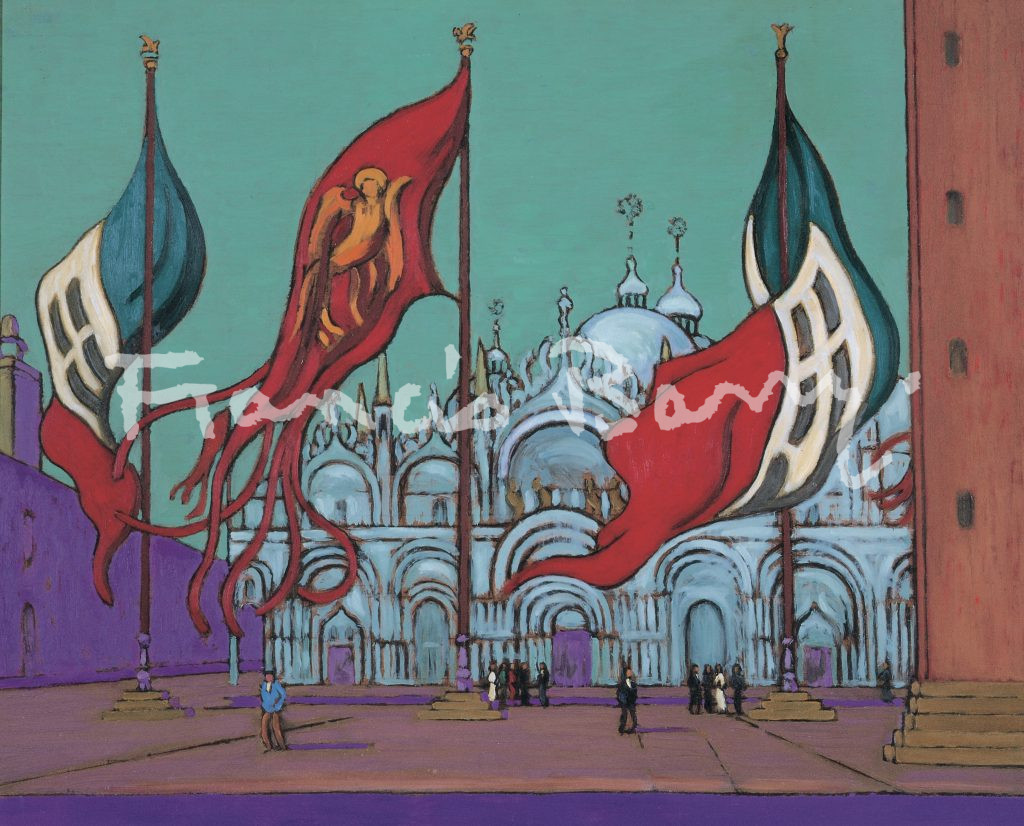
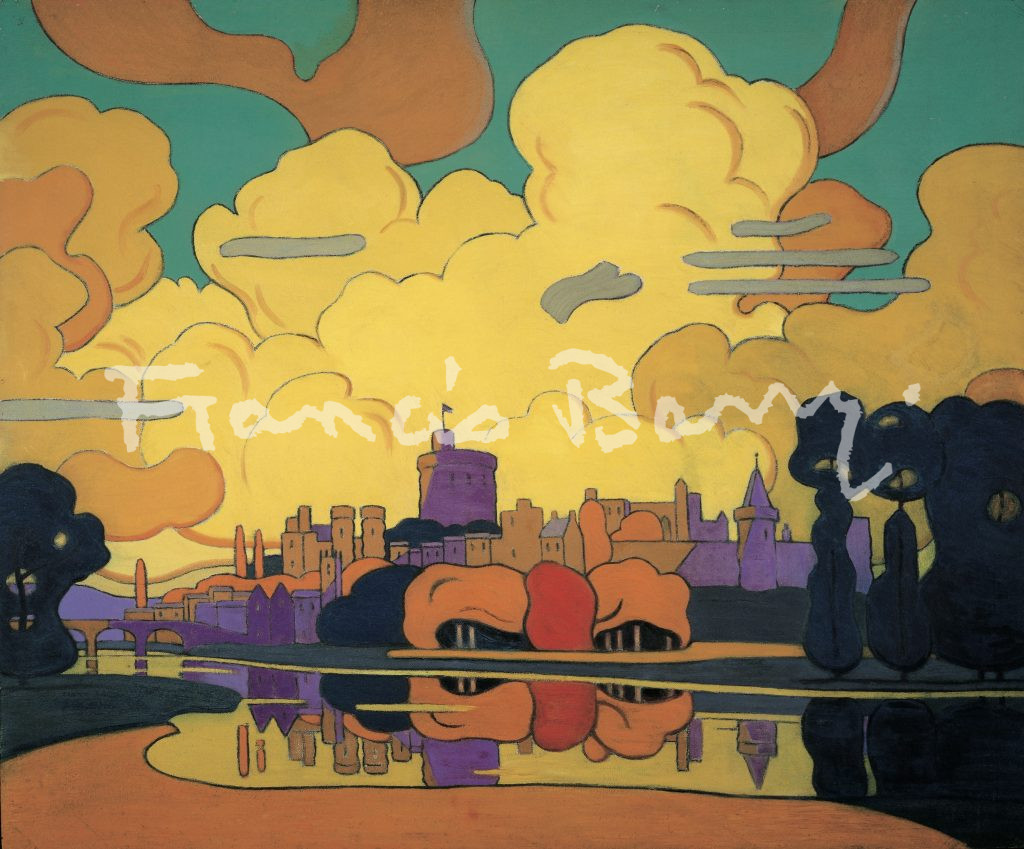
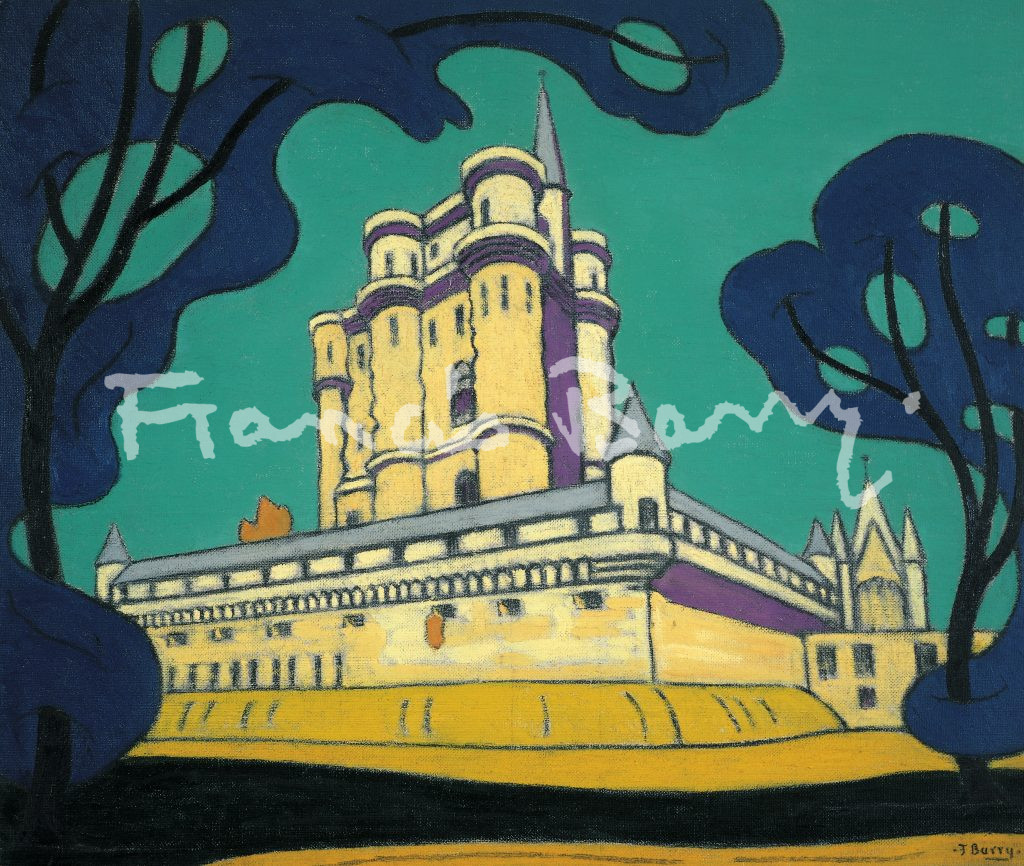
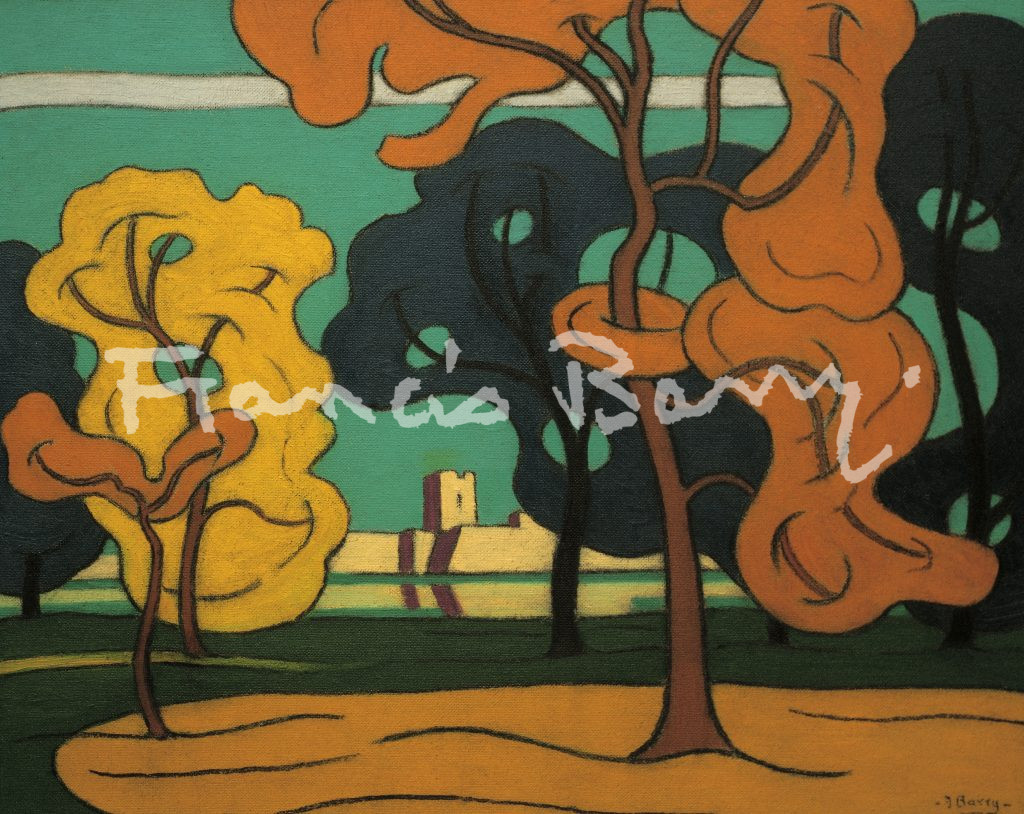
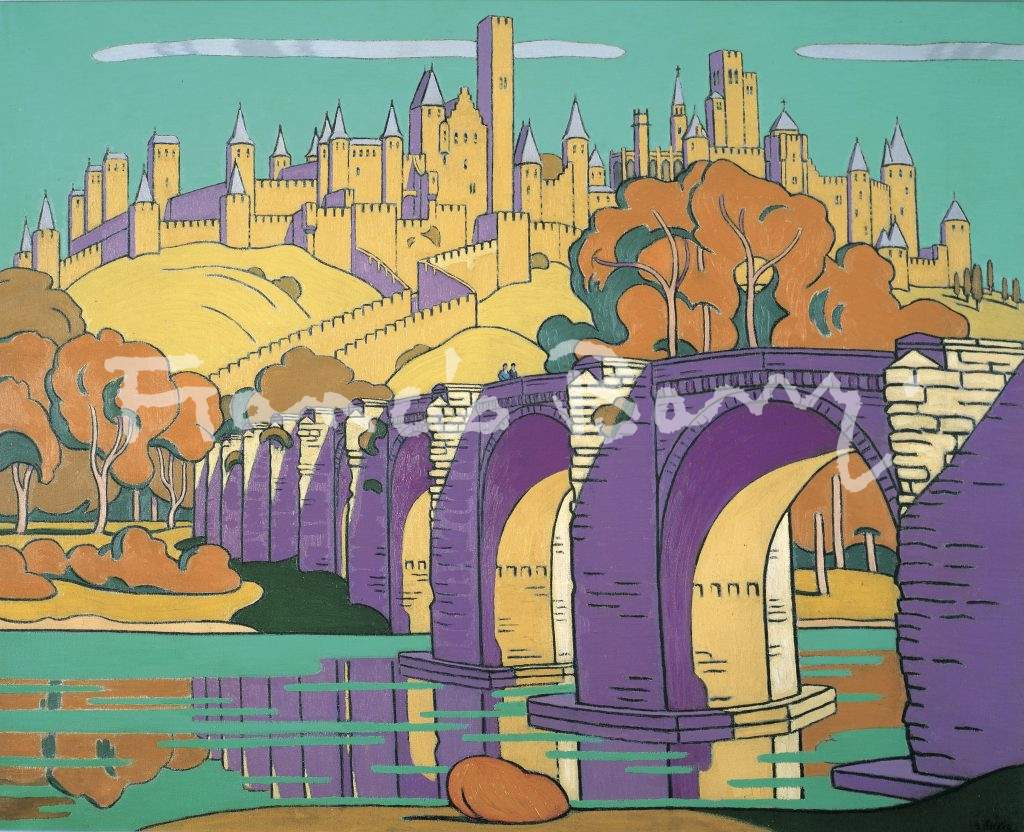
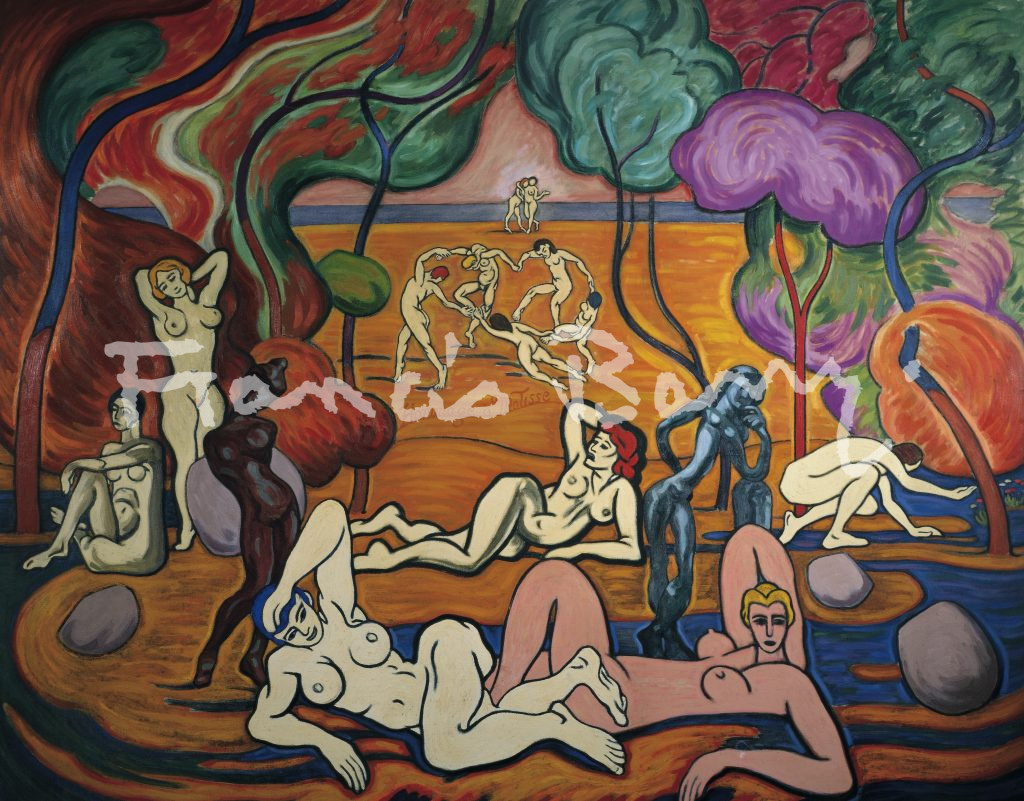
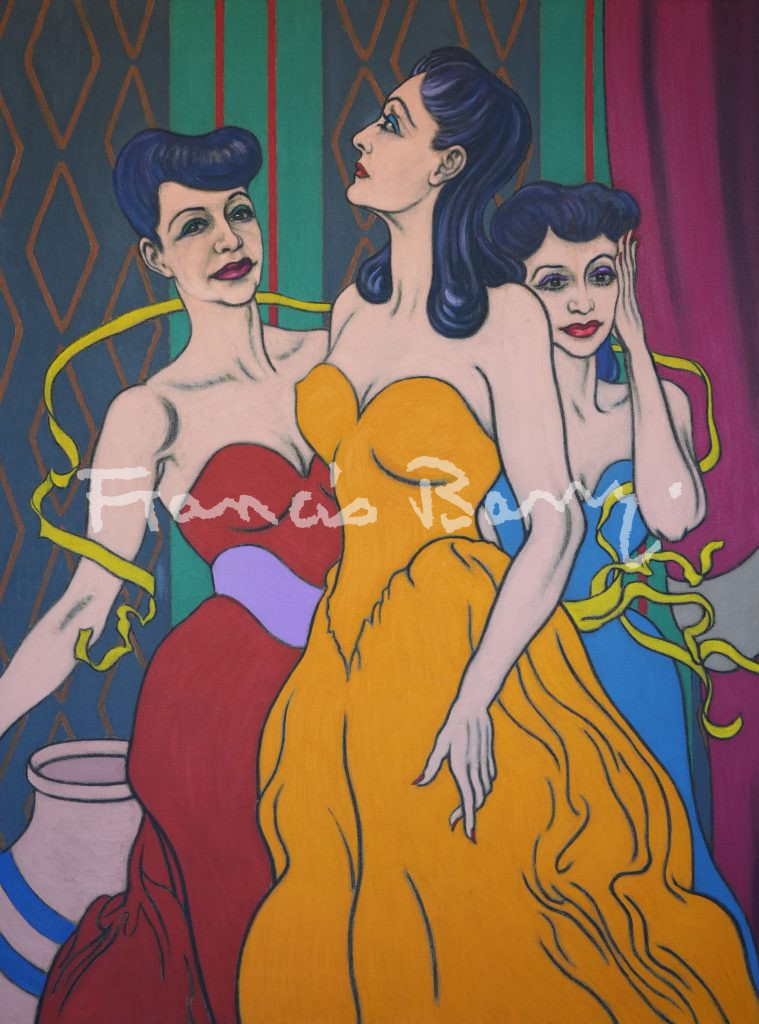
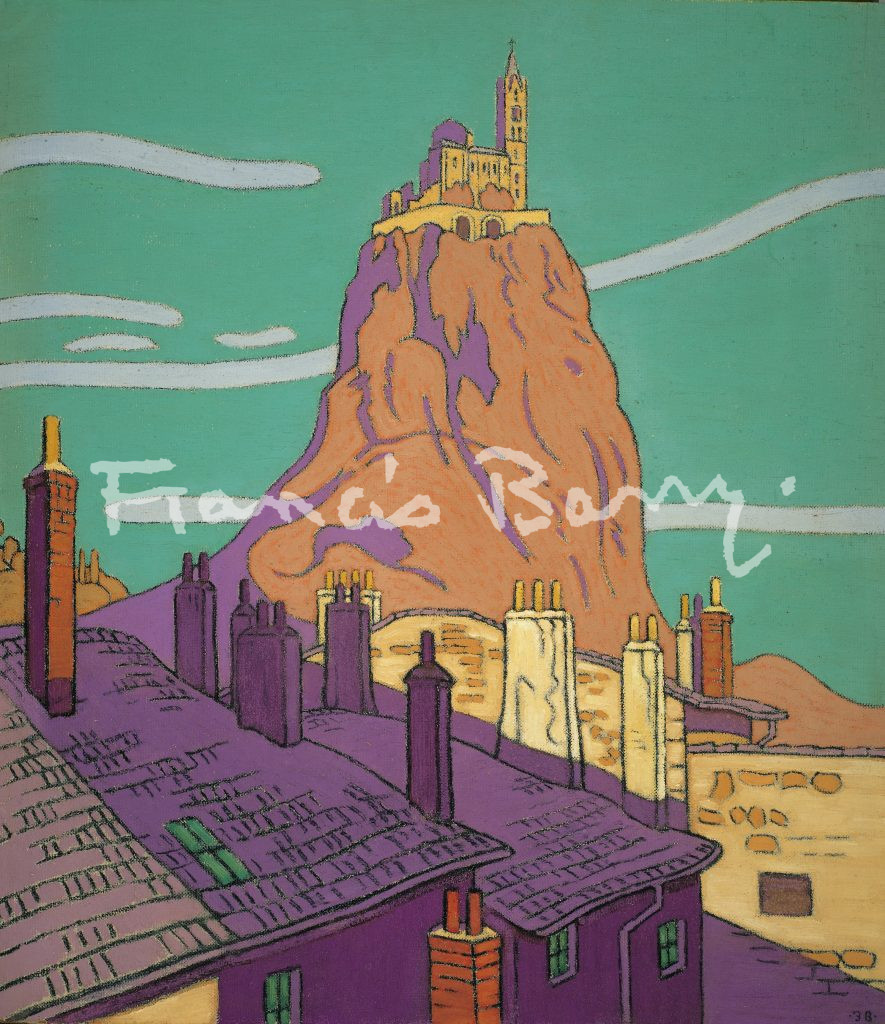
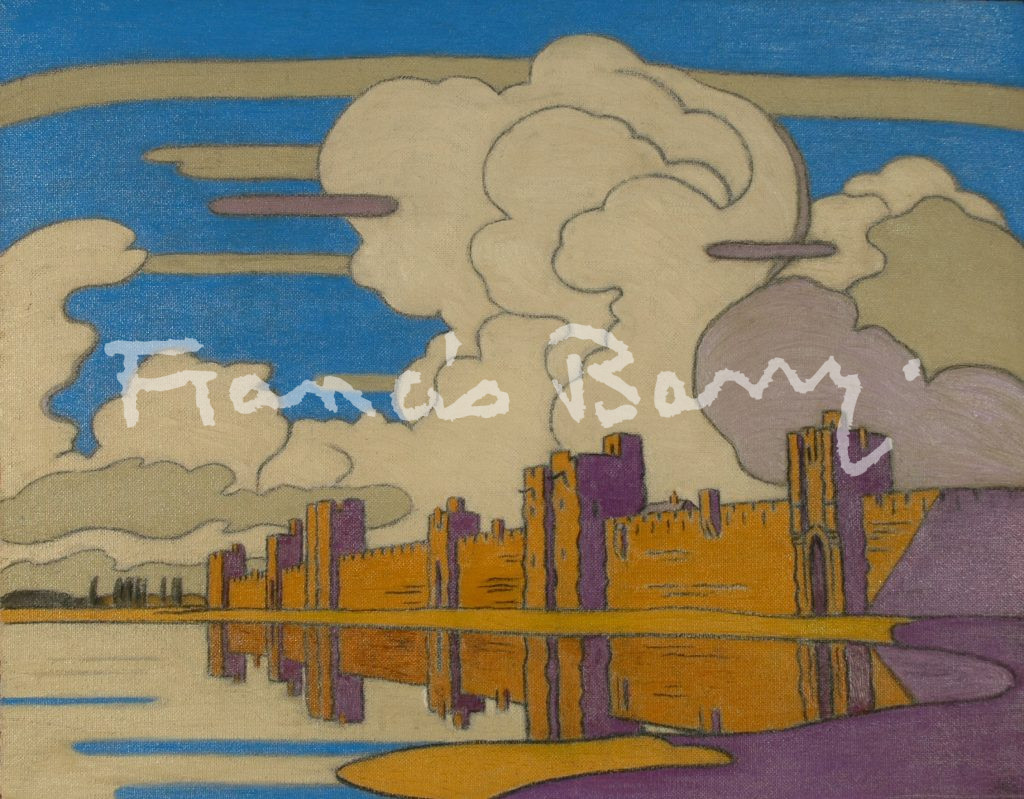
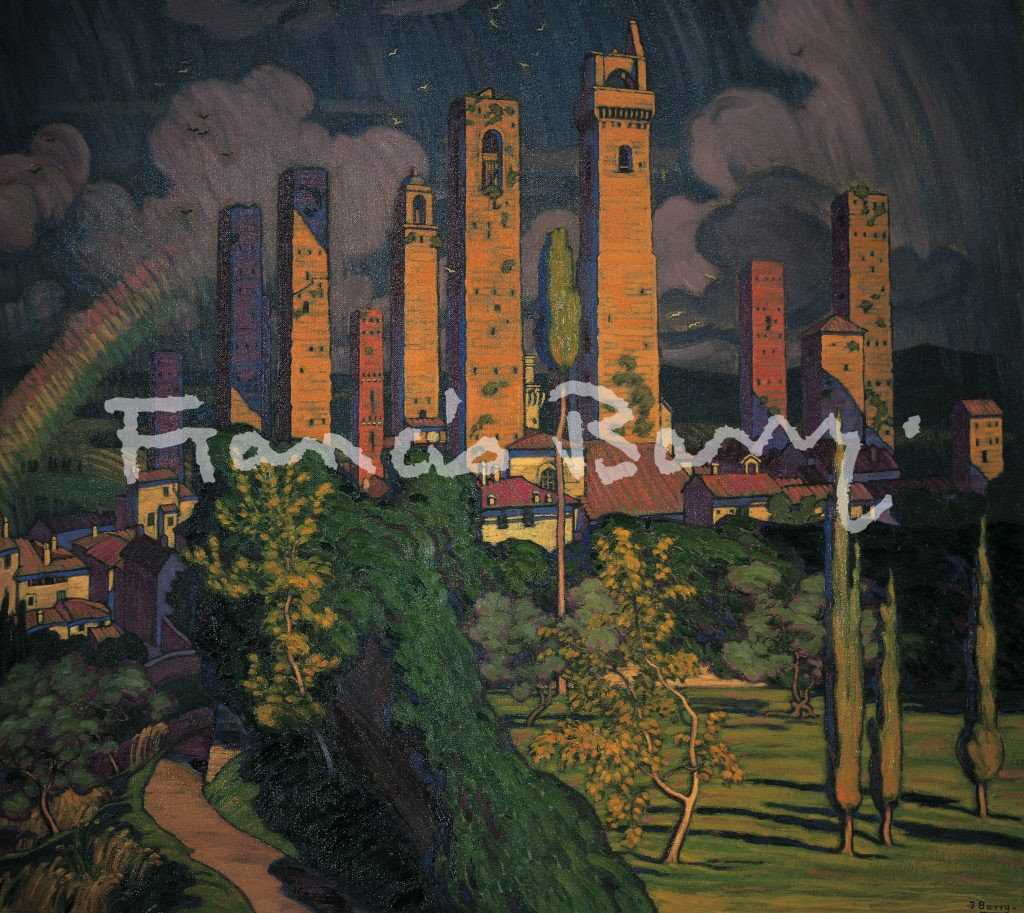
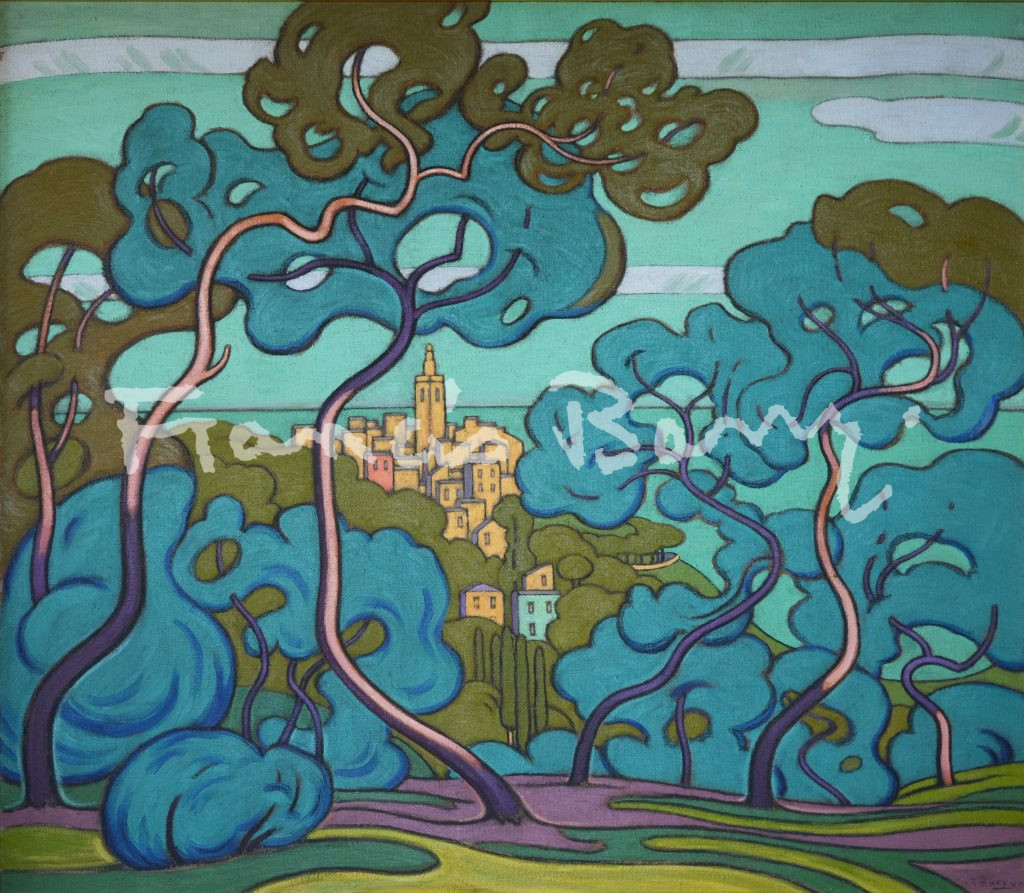
He interpreted the world onto the canvas with great expression, paying meticulous attention to his brush marks: “They can’t just go anyhow,” he wrote. He paid particular attention to trees, which he called “the glory of a landscape, an artist’s joy, and a man’s best friend”. By focusing on the character and vitality of an object rather than its superficial likeness, he transfigured the world around him, turning trees into “symbols of dance”, as seen in Silver and Grey, Venice.
This approach allowed him to strip away the unnecessary to reveal an elemental structure with a timeless quality. Ultimately, his modernistic style served as a sanctuary; though he found the world “cruel and insensitive”, his art allowed him to find a “calm and serene” effect within the chaos, documenting both his poetic vision and his resilience as a modernist pioneer. Through his obsessive and repetitive depictions of Jersey landscapes, most notably St. Aubin’s Fort and Elizabeth Castle, Barry’s Modernist works feel alive with movement, even while depicting profoundly solitary moments.
If you would like to receive more information about Sir Claude Francis
Barry, Bt., R.B.A, why not get in touch?