
Sir Claude Francis Barry, Beyond a Single Style
One of the most revealing ways to understand Sir Claude Francis Barry, Bt., R.B.A. (1883–1970) is to look at the sheer range of work he produced.
Barry cannot be comfortably defined by one movement, medium or period. Across a long working life, he moved between Pointillism, drawing, etching, portraiture, the nude, wartime painting and increasingly bold forms of Modernism. At times, works produced decades apart can appear to have been made by different artists.
Yet look more closely and certain concerns remain remarkably consistent: colour, light, structure, simplification and an intense interest in how a subject should be organised on the surface.
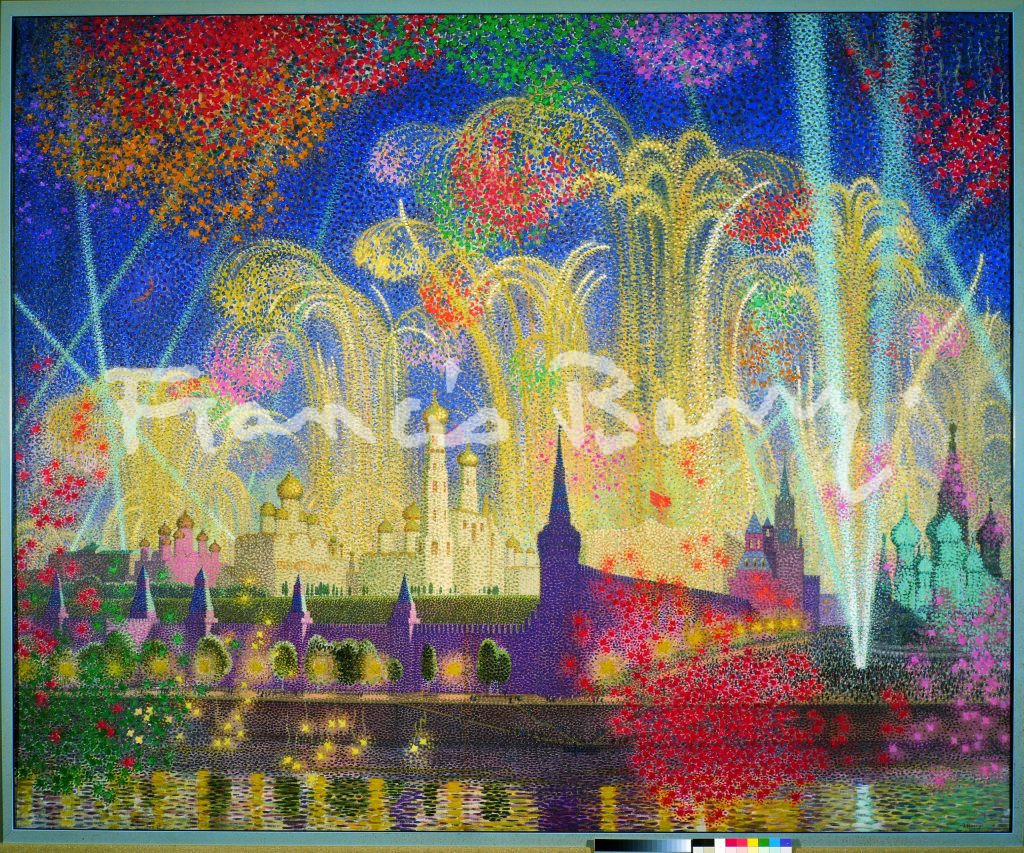
Pointillism: Barry’s Exploration of Colour and Light
Colour was fundamental to Barry’s approach to painting.
In his Pointillist works, separate marks of colour interact when viewed from a distance, creating luminosity through optical relationships rather than conventional blending. Barry was influenced by the possibilities opened by Neo-Impressionism, but his use of the technique developed into something distinctly his own.
Celebrations, landscapes, figures, skies and artificial light all provided opportunities to explore what happens when colour becomes part of the structure of a painting rather than simply a description of what is seen.
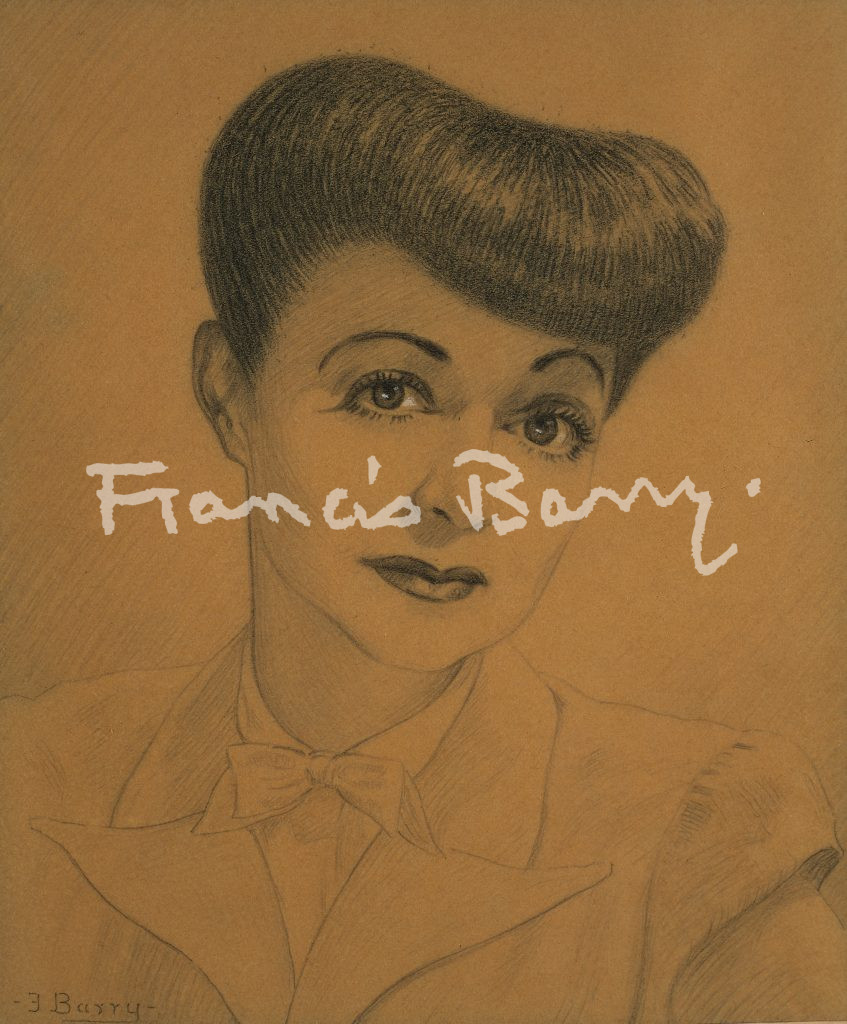
Drawings: The Discipline Behind the Paintings
Barry’s drawings reveal another side of his genius.
Far from being casual preliminary exercises, drawing could be an exacting and highly disciplined process. He used grids, careful measurements and charcoal studies to resolve proportion, perspective and composition before committing himself to paint.
This process helps explain an important tension within his finished work. Even paintings that initially appear atmospheric or spontaneous can rest upon a carefully organised underlying structure.
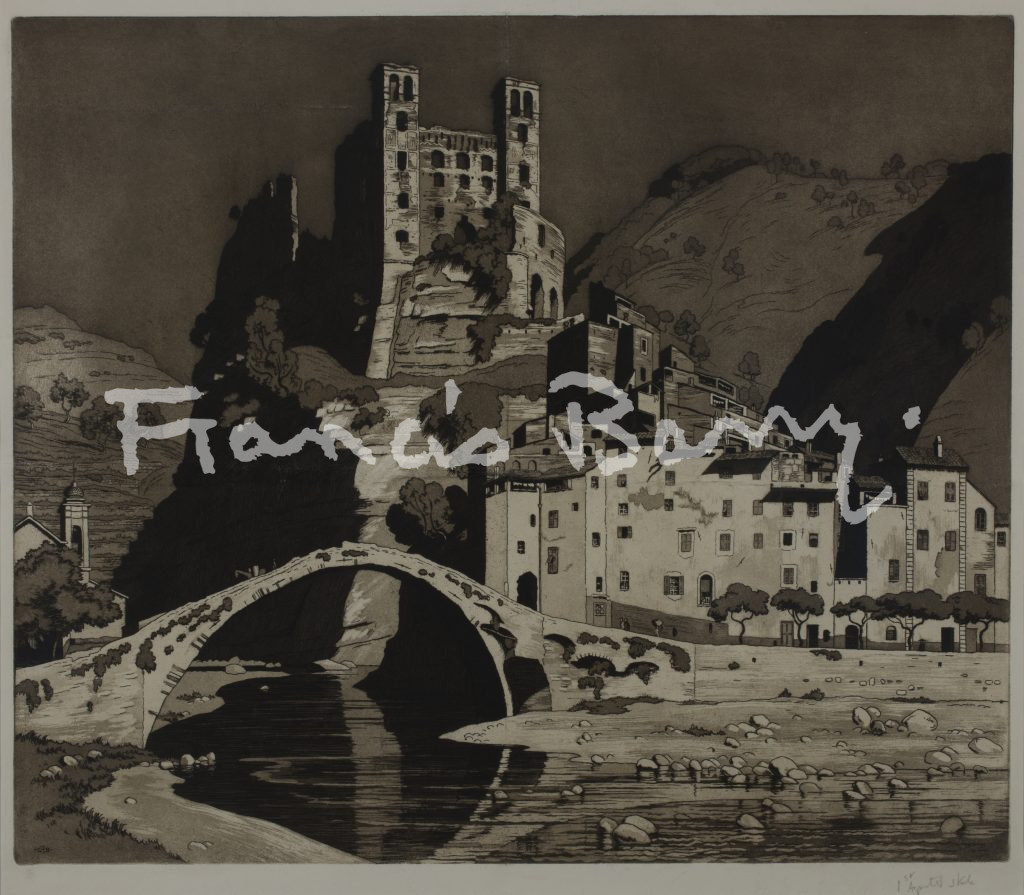
Etchings: Architecture, Line and Tone
Barry was also an accomplished etcher, producing views of Venice, Carcassonne, French and Italian towns, bridges, churches and architectural landmarks.
Without the possibilities of painted colour, he relied upon line, tone, contrast and economy of line. Architecture could emerge from darkness or be reduced to a small number of carefully controlled tonal relationships.
The etchings demonstrate that Barry’s fascination with atmosphere did not depend upon colour alone. Light and structure could be equally powerful in black, white and sepia.
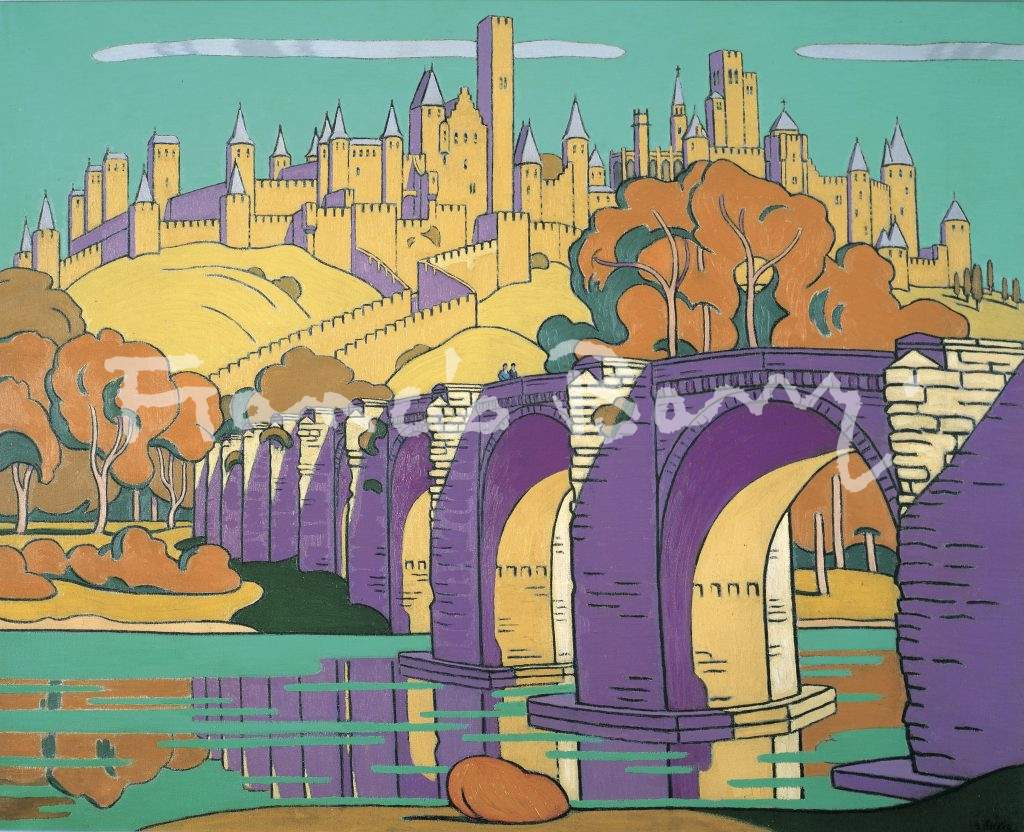
Modernism: An Artist Continually Reinventing Himself
Barry’s later work demonstrates perhaps most clearly his refusal to remain within one established style.
Landscapes and architectural subjects became increasingly simplified. Trees twist into rhythmic forms, buildings become planes of colour and familiar places are reorganised through bold outlines and contrasting shapes.
His paintings of France, Italy and Jersey show an artist increasingly interested in the character of a place rather than detailed topographical description. Modernism offered Barry another language through which to pursue something that had concerned him throughout his career: how much could be removed while still retaining the essential identity of the subject.
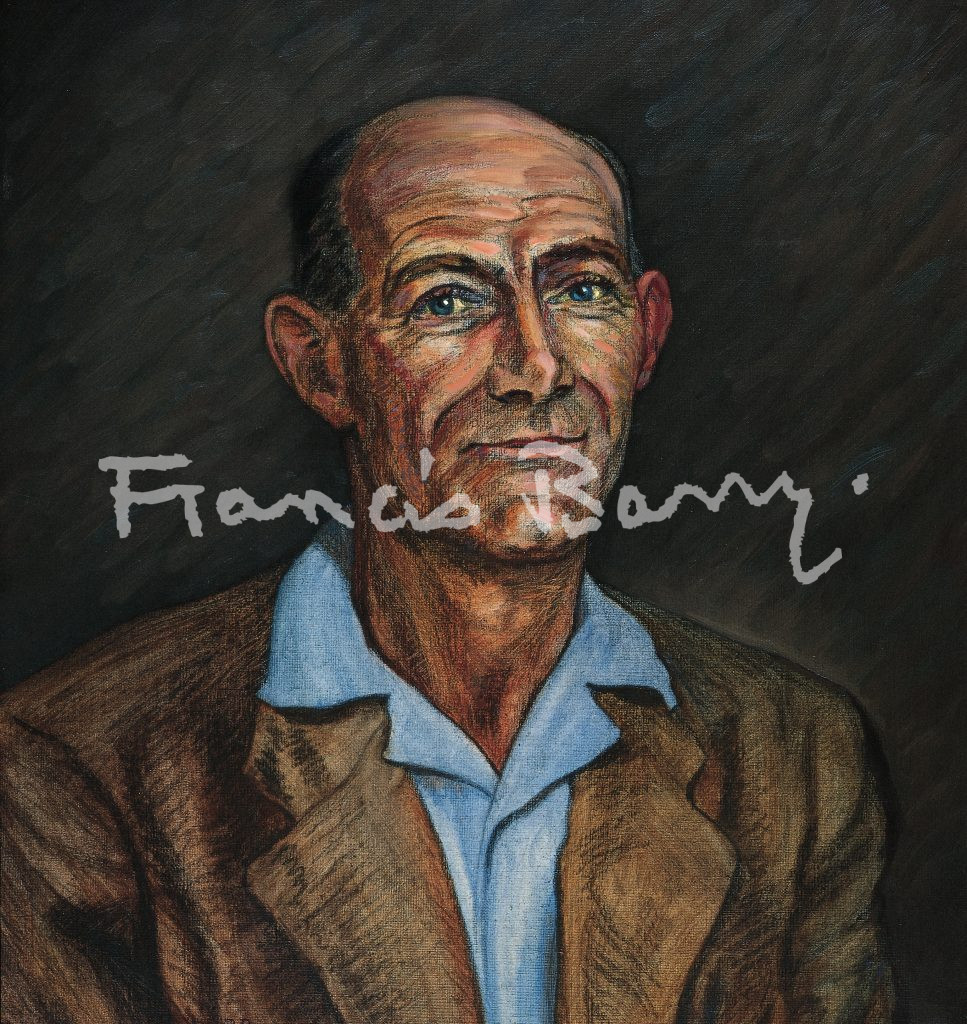
Nudes and Portraits: The Human Figure
The human figure provided Barry with a different set of challenges.
His nudes range from carefully observed studies to increasingly stylised compositions in which contour, colour and pose become dominant. His portraits similarly reveal an interest in character rather than an accumulation of descriptive detail.
Barry believed strongly in establishing a centre of interest within a portrait. A face, an eye or another carefully chosen element could command attention while surrounding details were deliberately subordinated.
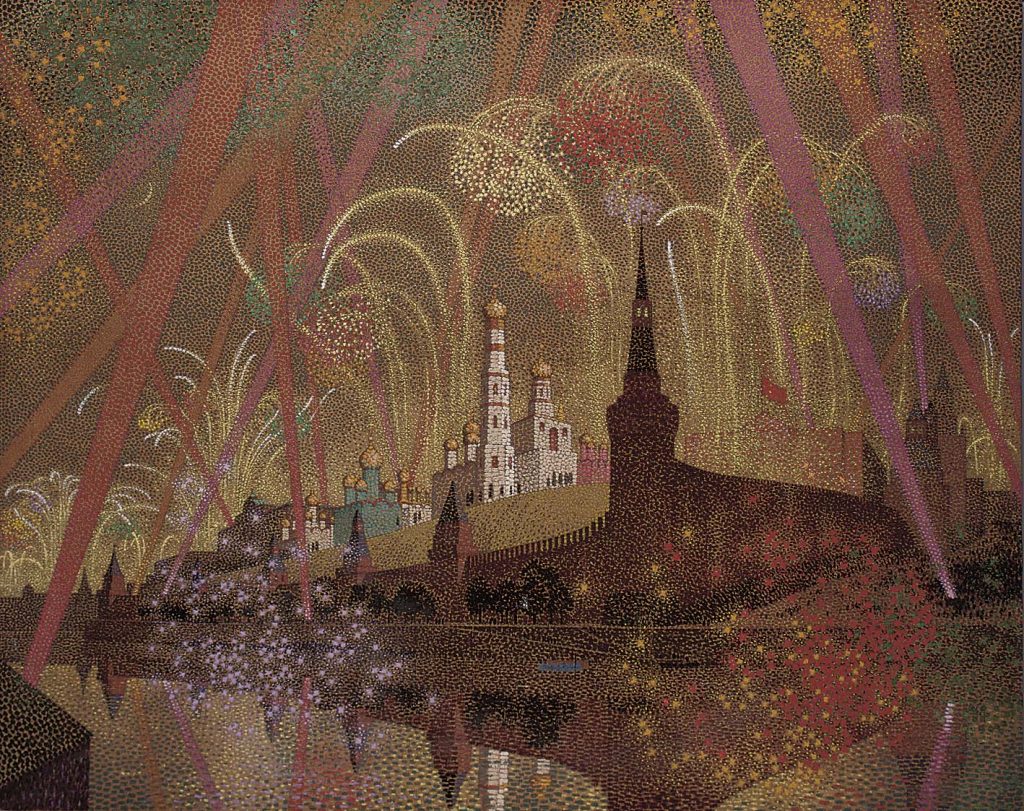
Wartime Paintings: Darkness, Searchlights and Structure
Barry’s wartime works occupy a particularly distinctive place within his career.
Associated with pacifism, he nevertheless responded artistically to the extraordinary visual circumstances created by war. In nocturnes of London and other wartime subjects, searchlights cut across dark skies, architecture becomes silhouette and artificial light transforms the composition.
These paintings do not romanticise conflict. Instead, they show Barry imposing remarkable structural discipline upon scenes defined by uncertainty, darkness and threat.
Discovering the Full Range of Sir Claude Francis Barry
Taken together, these different bodies of work make clear why Barry resists simple categorisation.
His career was not a steady progression towards one definitive style. It was a process of continual questioning and reinvention. Pointillism, Modernism, drawing, etching, portraiture, the nude and wartime painting each reveal something different — while also returning us to the same underlying concerns with colour, light, form and structure.
To discover Sir Claude Francis Barry properly is to look beyond a single style.
Explore the different strands of Sir Claude Francis Barry’s work throughout the Collection.