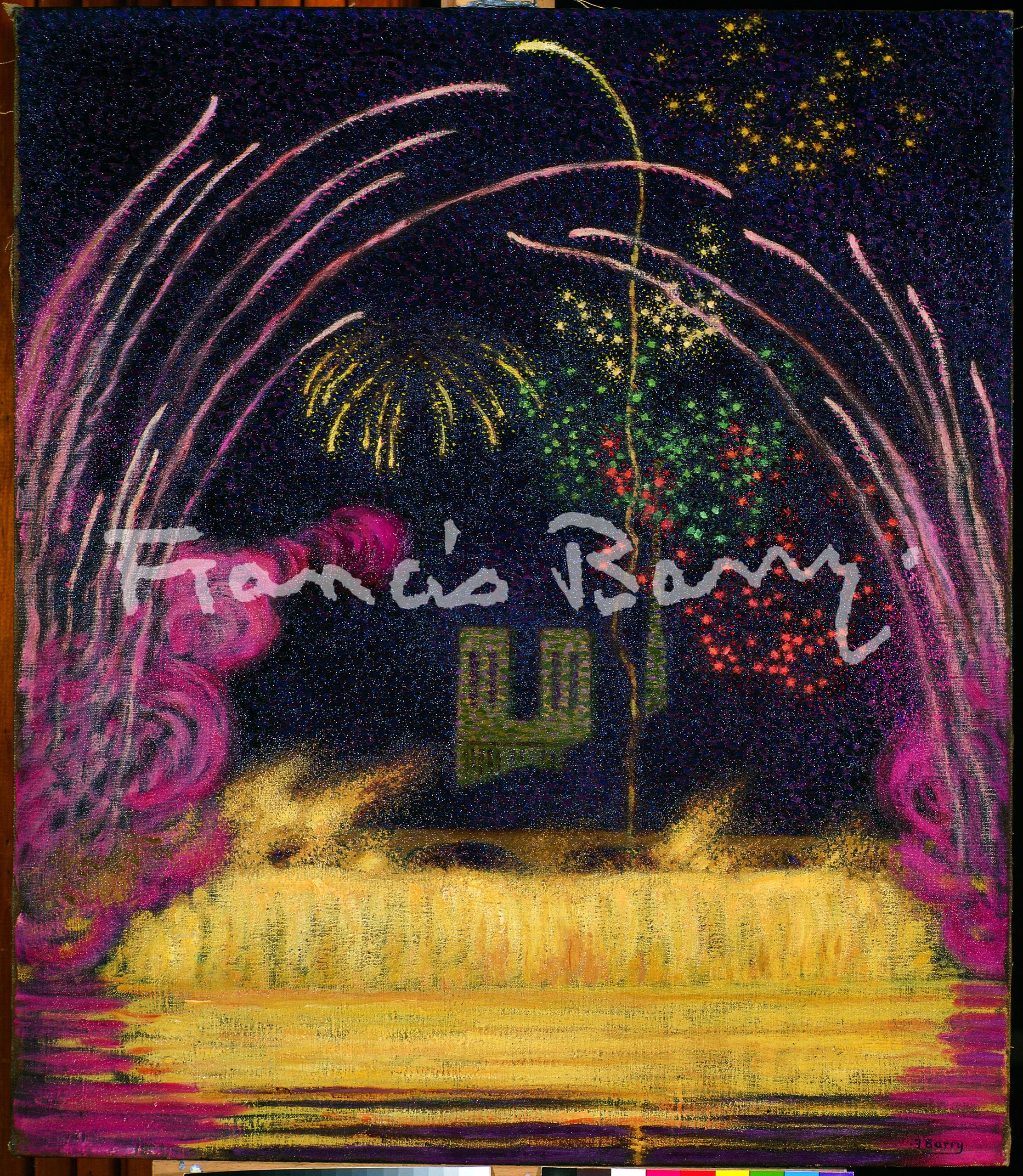

During the First World War, Sir Claude Francis Barry remained in England working as an agricultural labourer, an experience he later described as “the worst time of his life”. While many of his contemporaries were called to active service, Barry refused to fight as a pacifist; however, another account noted he was exempt due to ill health.
A In the midst of this turmoil, Barry’s presence in Britain allowed him to capture the unique atmosphere of a nation under siege. For security reasons, the government imposed a strict ban on outdoor painting, which significantly altered the young artist’s process. This period of confinement in the studio became a catalyst for a radical stylistic shift. Moving away from the relatively dated, romantic approach to landscapes, heavily influenced by his tutor, Sir Alfred East, Barry began to develop a more expressionistic style to communicate the tension of the conflict affecting the world.
“He finds the world cruel and insensitive, making him
an understanding friend”
– Misome Piele
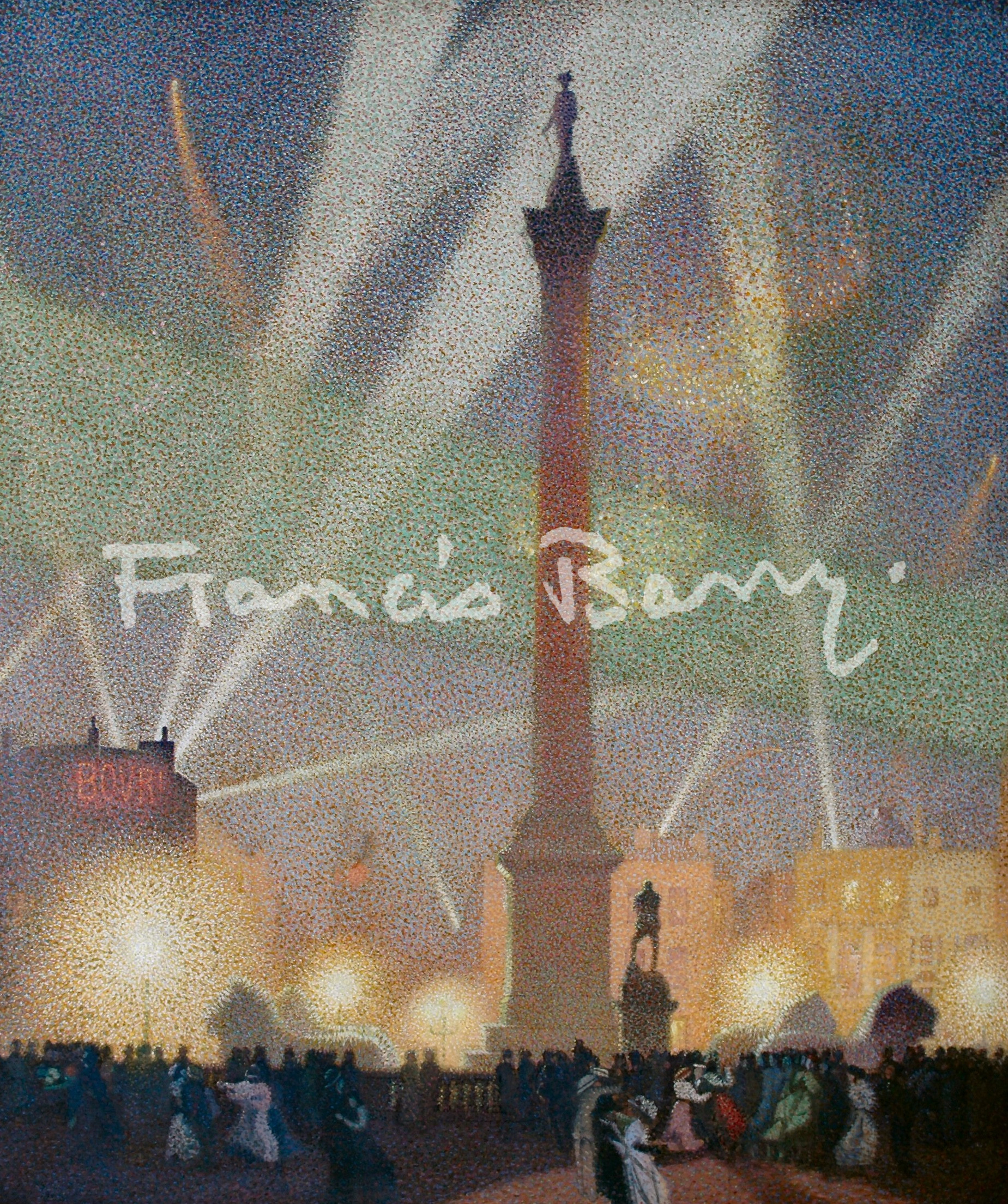
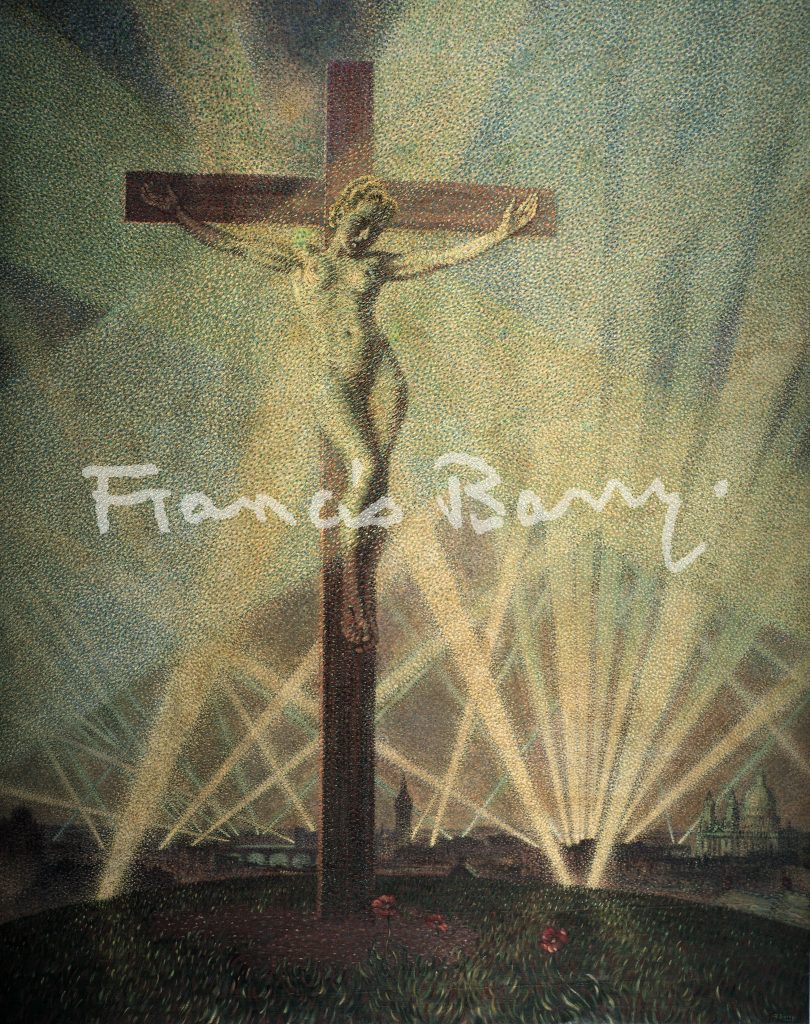
This transition birthed his celebrated Pointillistic “nocturnes”. Barry’s adoption of Pointillism, a foreign curiosity at the time, was unexpected within British circles; however, he made the style his own, continuing to defy expectations throughout his life. Barry’s Pointillistic and wartime works remain instantly recognisable and are as striking today as the day they were painted. They are characterised by their rigid structure, rich and confident colours, and stimulating compositions clearly.
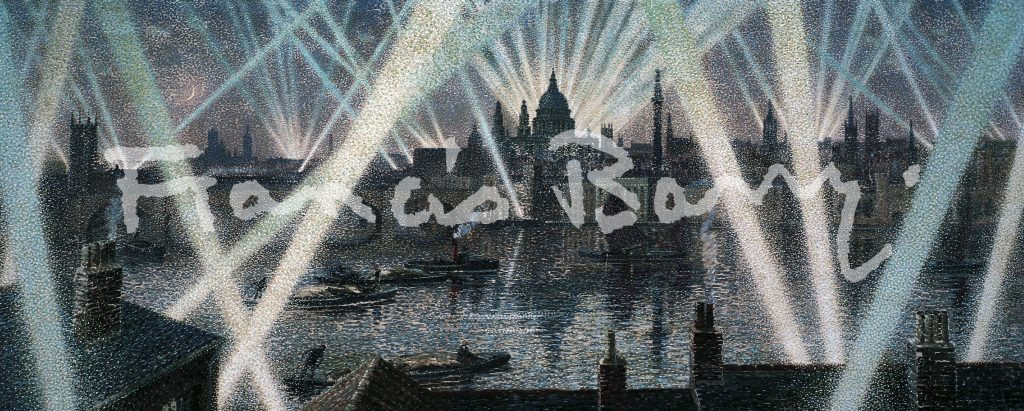
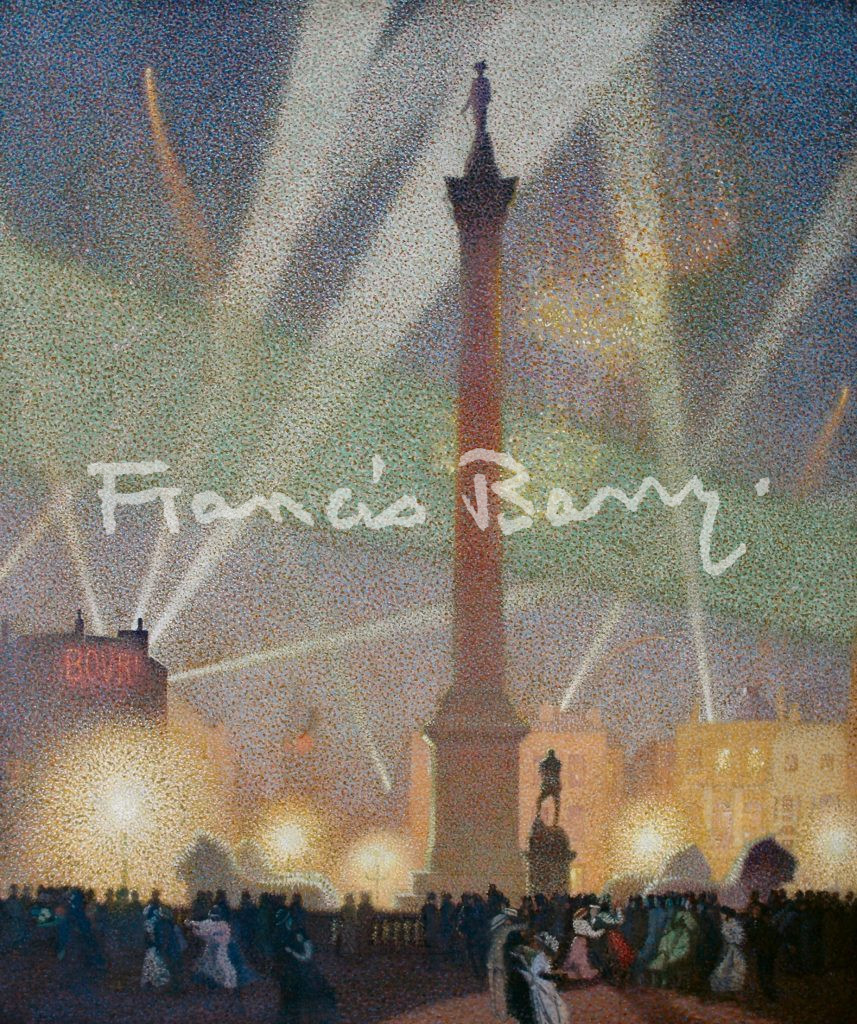
Barry implemented the skills taught to him by Brangwyn during his time in Cornwall. Brangwyn was a colourist who utilised pure hues to create a harmonious, decorative effect by reducing the palette to no more than seven, or even five, tones. Barry applied colour with similar pride and method, as seen in works such as Chelsea: A Wartime Nocturne and Trafalgar Square, Peace Night. In these pieces, his dynamism of form transfigures the danger of nocturnal air strikes into luminous, dramatic patterning. Following the “oval rule” of composition noted in his unpublished manuscript, Painting, Barry would work closely with charcoal designs, sometimes for weeks or months before applying paint, ensuring that even his most intense wartime compositions maintained a structural unity.
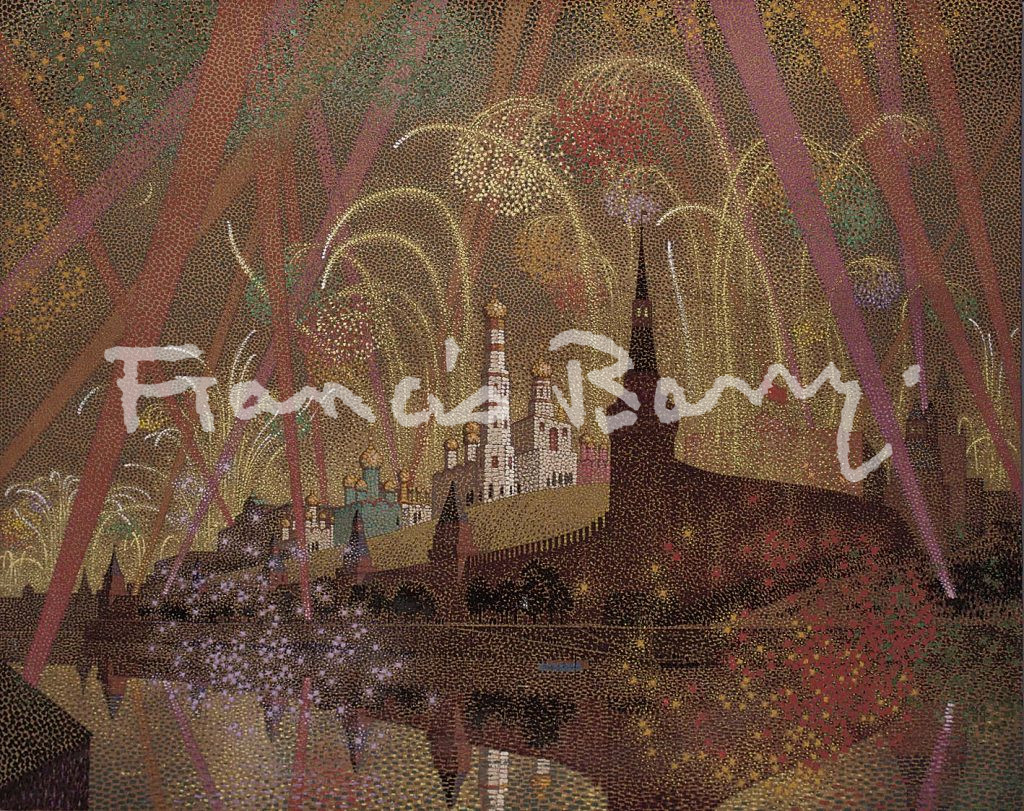
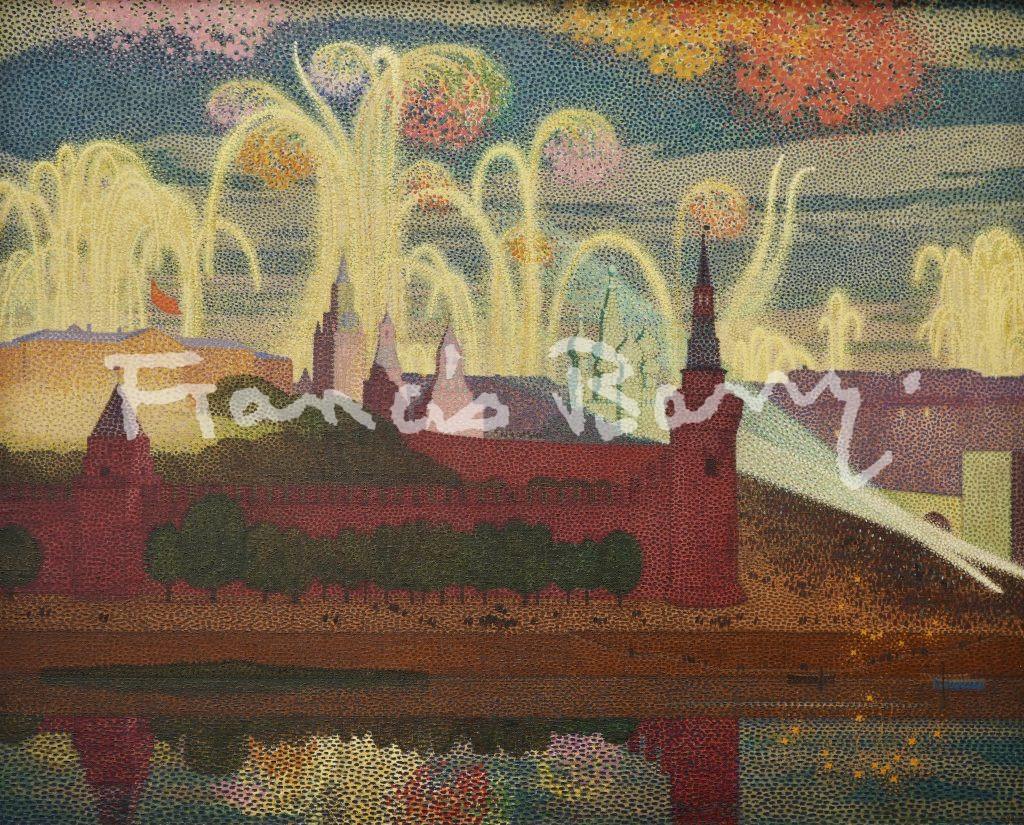
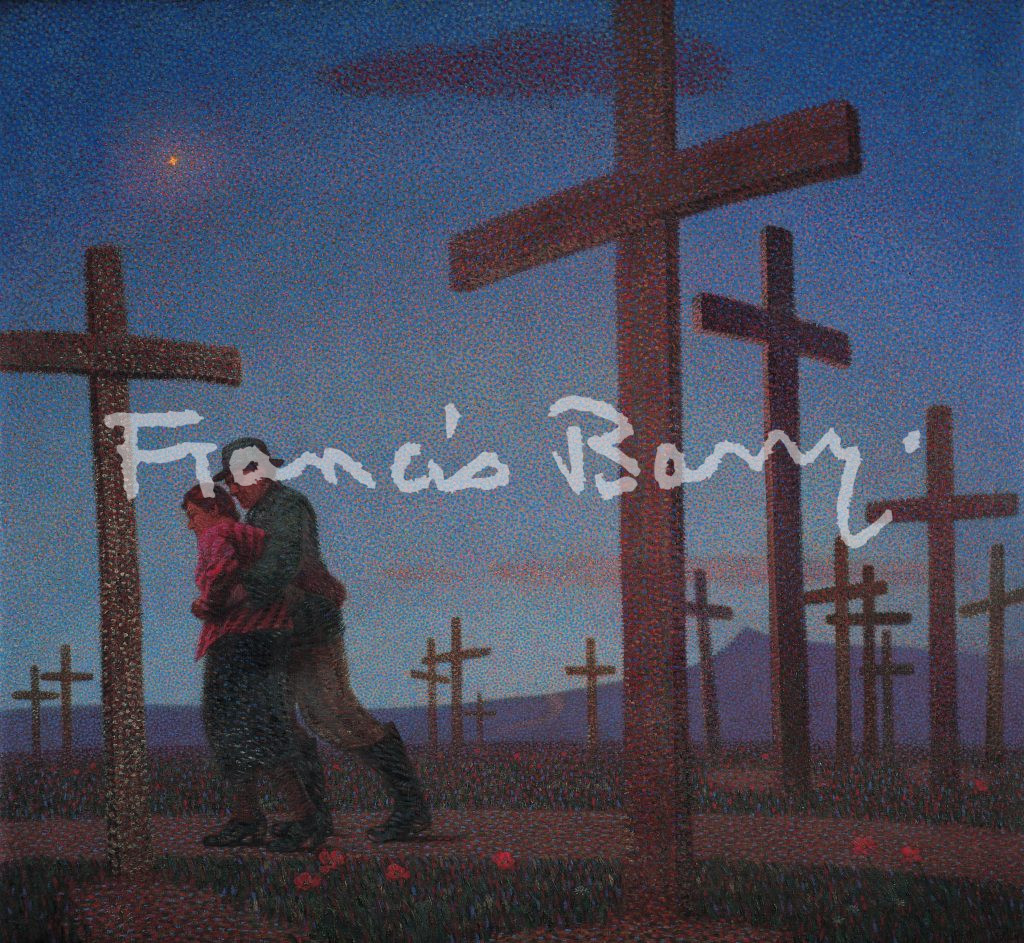
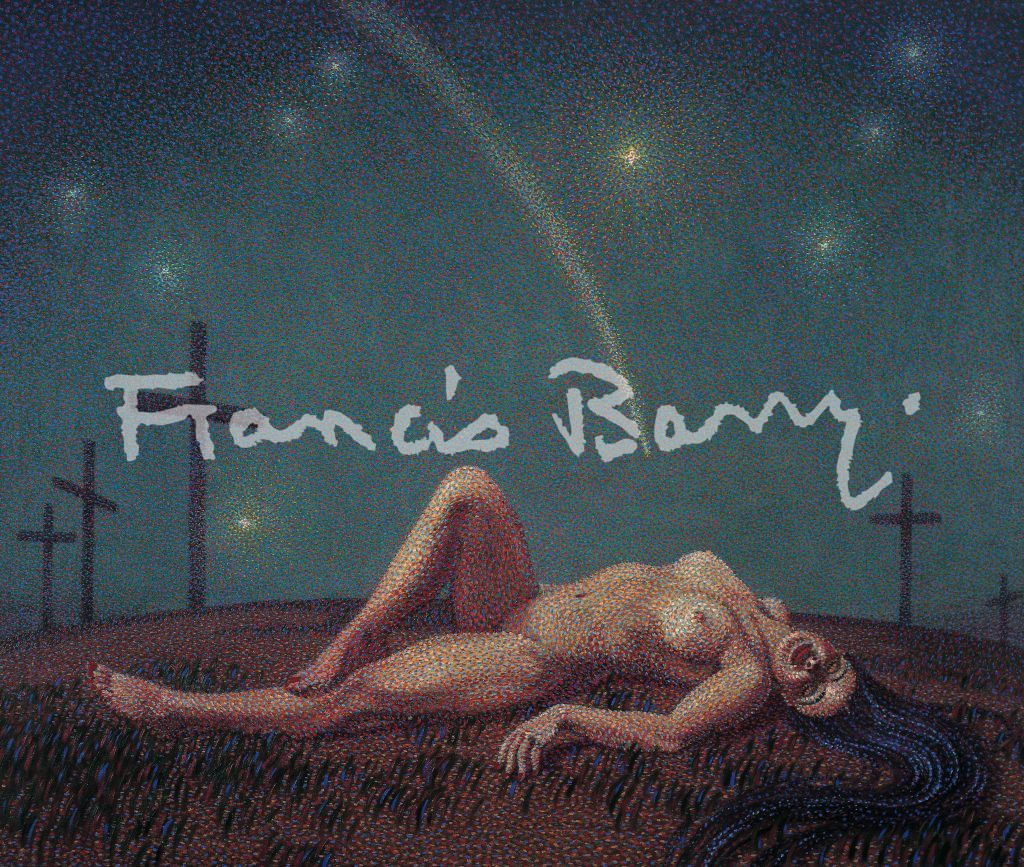
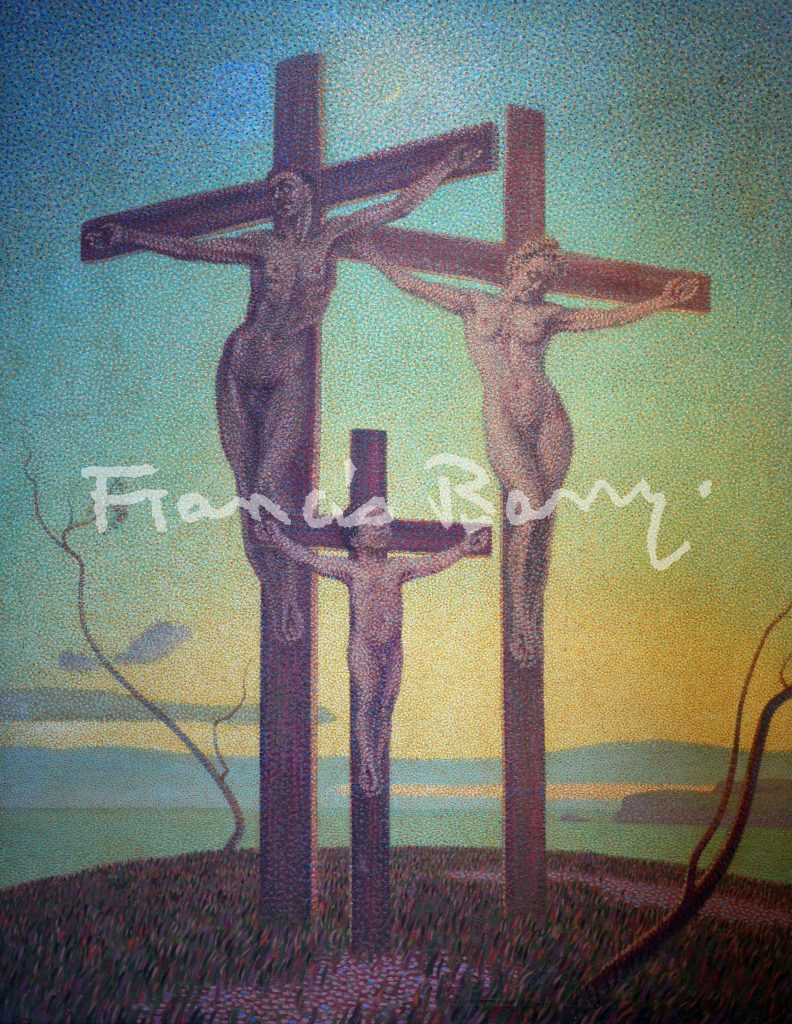
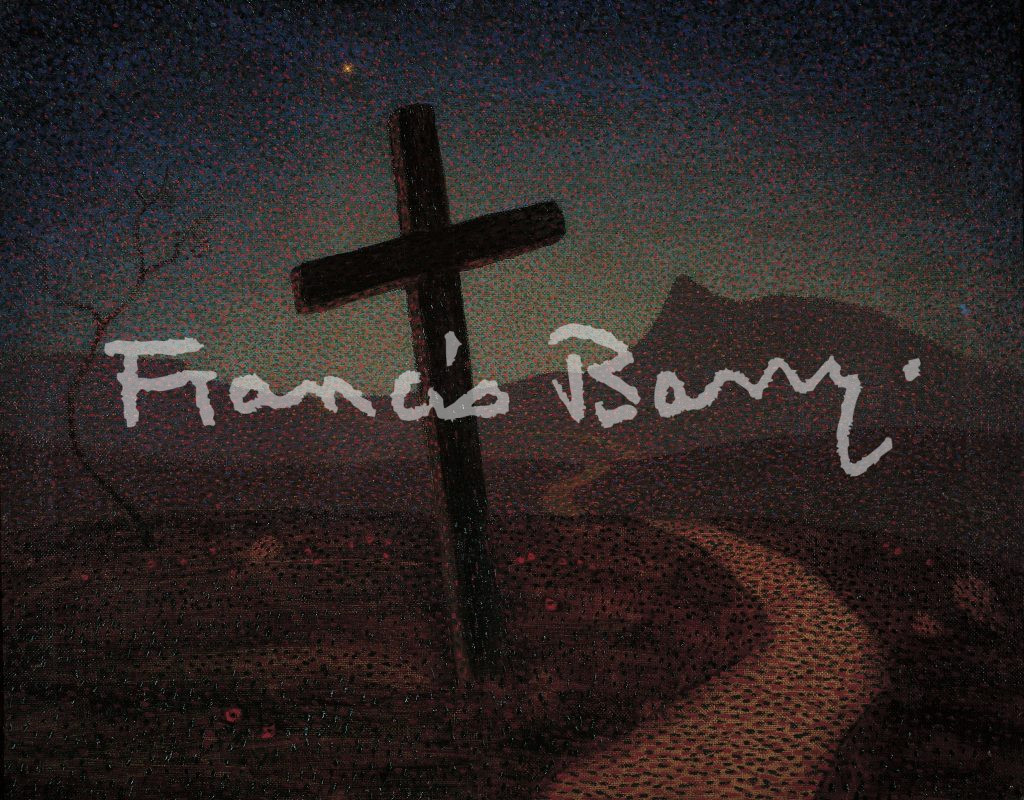
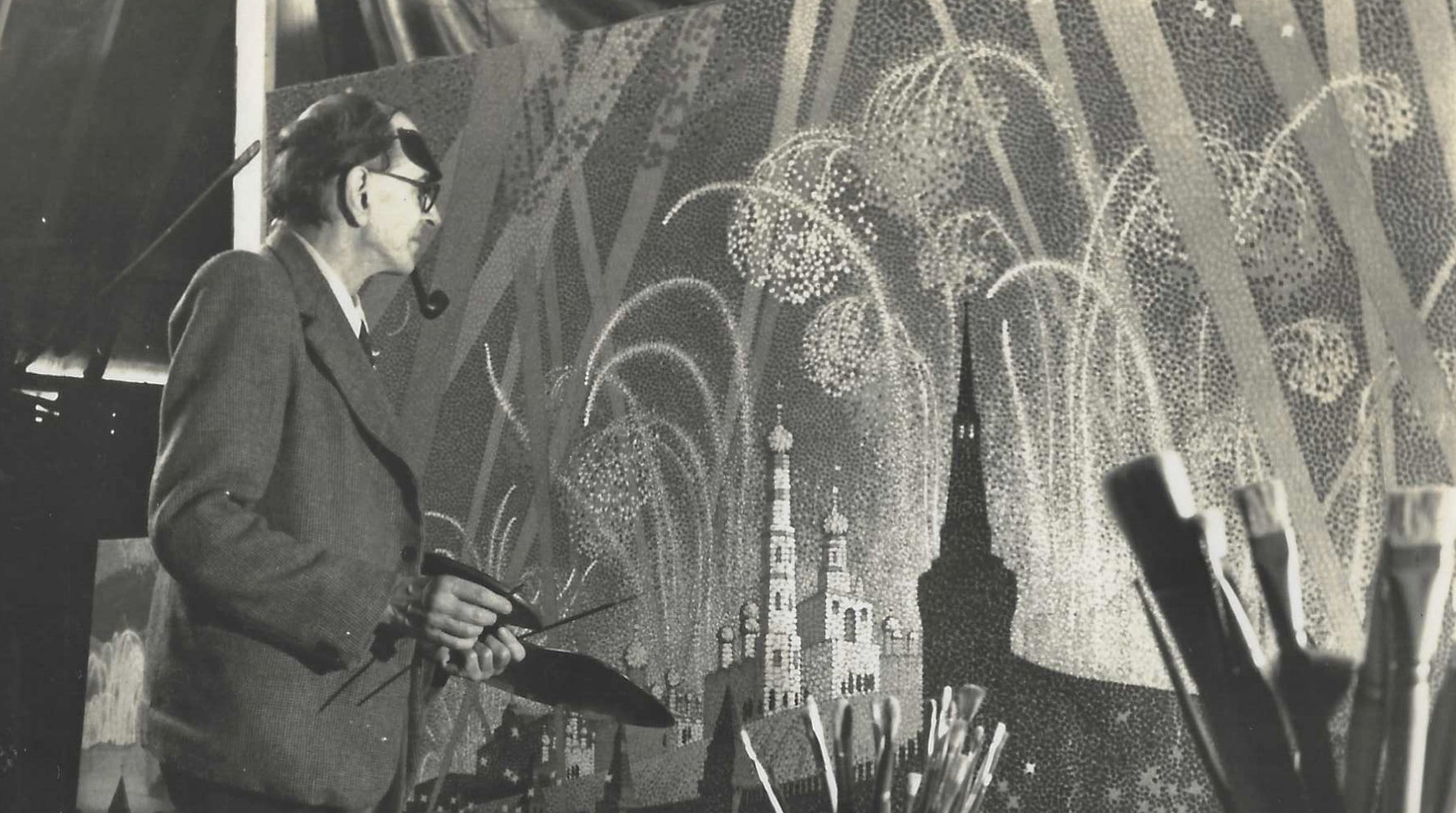
As a child, Barry was somewhat detached from his family; his mother passed away before he was two years old, and while at Harrow, he would frequently request pictures of her. He also had three step-siblings whose interests were often placed above his own by his stepmother. This internal state of loss was felt throughout his life and is reflected in the evocative nature of his wartime works, where vast skies dwarf solitary, sweeping figures, creating a profound sense of isolation amidst the chaos.
As a result of these life experiences and the outbreak of war, Barry found the world to be cruel and insensitive. Misome Piele, a lifelong friend, noted that this perspective made him a deeply understanding companion; in parallel, it enabled Barry to document both fear and artistic resilience with a commanding strength of vision. Whether depicting Fires of Victory, Moscow or the mechanical military searchlights crossing the London skyline, his wartime body of work remains an unforgettable legacy. He successfully elevated the grim reality and moments of terror of the World Wars into an elegant, timeless, and serene vision of art.
If you would like to receive more information about Sir Claude Francis
Barry, Bt., R.B.A, why not get in touch?